The $2.5 Billion rover of NASA, Curiosity is all set to take the tiniest detail of the planet Mars. The rover is designed to be highly precise in observing its ambient conditions including atmospheric pressure and the gravitational force. For this purpose, it’s Instrumental Control Unit or the ICU has been equipped with pressure sensors. These sensors will help in detecting the Dust Devils that are a characteristic of the planet and will also detail with the concentration of various gases in the atmosphere at various points. Let’s have a look on what makes a pressure sensor capable enough to perform such specific tasks and where else it can be used.
A pressure sensor is a device which senses pressure and converts it into an analog electric signal whose magnitude depends upon the pressure applied. Since they convert pressure into an electrical signal, they are also termed as pressure transducers.
Need for Pressure Sensors
Since a long time, pressure sensors have been widely used in fields like automobile, manufacturing, aviation, bio medical measurements, air conditioning, hydraulic measurements etc. A few prominent areas where the use of pressure sensors is inevitable are:
1. Touch Screen Devices: The computer devices and smart phones that have touch screen displays come with pressure sensors. Whenever slight pressure is applied on the touch screen through a finger or the stylus, the sensor determines where it has been applied and accordingly generates an electric signal that informs the processor. Usually, these sensors are located at the corners of the screen. So when the pressure is applied, usually two or more such sensors act to give precise location information of the location.
2. Automotive Industry: In automotive industry, pressure sensors form an integral part of the engine and its safety. In the engine, these sensors monitor the oil and coolant pressure and regulate the power that the engine should deliver to achieve suitable speeds whenever accelerator is pressed or the brakes are applied to the car.
For the purpose of safety, pressure sensors constitute an important part of anti-lock braking system (ABS). This system adapts to the road terrain and makes sure that in case of braking at high speeds, the tires don’t lock and the vehicle doesn’t skid. Pressure sensors in the ABS detail the processor with the conditions of the road as well as the speed with which the vehicle is moving.
Air bag systems also use pressure sensors so that the bags get activated to ensure the safety of the passengers whenever high amount of pressure is experienced by the vehicle.
3. Bio Medical Instrumentation: In instruments like digital blood pressure monitors and ventilators, pressure sensors are needed to optimize them according to patient’s health and his requirements.
4. Industrial Uses: Pressure sensors are used to monitor gases and their partial pressures in industrial units so that the large chemical reactions take place in precisely controlled environmental conditions. In oil industry, sensors detail with the depth that the oil rig has reached while exploring.
5. Aviation: In the airplanes, these sensors are needed to maintain a balance between the atmospheric pressure and the control systems of the airplanes. This not only protects the circuitry and various internal components of the airplane but also gives exact data to the system about the external environment. Also, particular levels of air pressure need to be maintained in the cockpit and the passengers lobby to provide nominal ground like breathing conditions.
6. Marine Industry: For ships and submarines, pressure sensors are needed to estimate the depth at which they are operating and for detailing the marine conditions so that the electronic systems can remain safe. Oxygen requirements of under water projects are also regulated by the pressure sensors.
Types of Pressure Measurements
Pressure measurement can either be relative to a reference value or on an absolute scale.
1. Absolute Pressure Measurement: Pressure measured relative to perfect vacuum is termed
as absolute pressure. Perfect vacuum is a condition where there is no matter present in the atmosphere and hence, nil air pressure exists in that region. Absolute pressure sensors have limited usage because it is impossible to attain a state of perfect vacuum. Hence, sensors based on absolute pressure measurement require strict specifications for precise outputs. Sensors based on this type of measurement are used in barometric or altitude related pressure measurements.
2. Differential Pressure Measurement: In differential pressure measurement, pressures of two distinct positions are compared. For example, pressure difference calculated by measuring it at different floors of a tall building will give us differential pressure. Differential pressure measurements, typically taken in pound per square inch differential (psid), are applied when high amount of pressure is to be measured. These types of measurements are used for feed pressure monitoring purposes where the pressure with which the fluid is flowing in a medium is monitored, so that homogeneity in the flow can be maintained.
Differential pressure measurements find an important application in monitoring filters in various types of purification systems. They take the reference of the normal pressure with which the filters clean the fluid. Whenever the filters face the problem of clogging due to contaminants, these pressure sensors give a reading relative to the normal pressure. This helps in keeping the filter clean and operational.
3. Gauge Pressure Measurement: It can be defined as a subtype of differential pressure measurement where we compare pressure at any point to the current atmospheric pressure. Gauge pressure measurement is used in applications like tire pressure or blood pressure measurement. There is no consistency in gauge pressure measurements because atmospheric pressure does vary with altitude and hence its applications are limited to non-critical measurements.
Types of Pressure Sensors
Types of Pressure Sensors
Based on the type of applications they are used in, pressure sensors can be categorized into many types. However, following are most common types of pressure sensors that have been widely used:
1. Strain Gauge Type: These sensors are similar to a wheat stone bridge in their working. In wheat stone bridge, the ratio of resistances of two adjacent arms connected to one end of the battery should be equal to that of other two arms connected to another end of battery. When the two ratios are equal, no output is generated from the wheat stone bridge. In the case of a strain gauge, one arm of the wheat stone bridge is connected to a diaphragm. The diaphragm compresses and expands due to the pressure applied. This variation in the diaphragm causes the output in the bridge to vary. A voltage would be generated proportional to every deviation from the normal balanced condition, so every single compression or expansion movement of the diaphragm will produce an output indicating a change in pressure conditions. Since resistance change is the main cause for potential difference, these sensors are also termed as piezo-resistive type of pressure sensors.
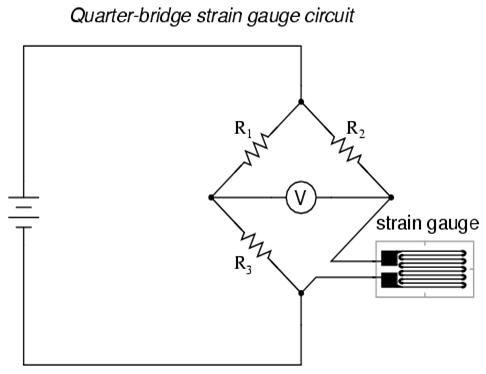
Fig. 1: Circuit Diagram of Quarter-bridge Strain Gauge Pressure Sensor
2. Capacitive Pressure Sensor: A capacitor has two metal plates and a dielectric sandwiched between them. In capacitive pressure sensor, one of these metal plates is permitted to move in and out so that the capacitance between them changes due to varying distance between the plates. The movable plate is connected to a diaphragm which senses the pressure and then expands or compresses accordingly. The movement of the diaphragm would affect the attached metal plate’s position and capacitance would vary.
These sensors, though much ineffective at high temperatures, are widely used at ambient temperature range due to their linear output.
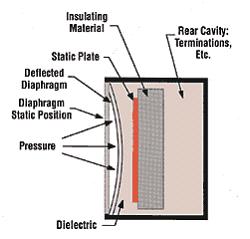
Fig. 2: Diagram Showing Internal Strucure of Capacitive Pressure Sensor
3. Piezoelectric Pressure Sensor: Piezoelectric crystals develop a potential difference (i.e. voltage is induced across the surfaces) whenever they are subjected to any mechanical pressure. These sensors have the crystal mounted on a dielectric base so that there is no current leakage. Attached to the crystal is a horizontal shaft to which a diaphragm is connected. Whenever the diaphragm senses pressure, it pushes the shaft down which pressurizes the crystal and voltage is produced.
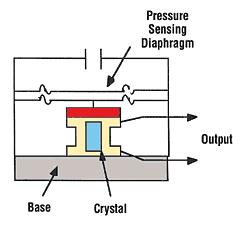
Fig. 3: Image Showing Details of Piezoelectric Pressure Sensor
Specification, Limitations & Challenges
Pressure Sensor Specifications
Since pressure sensors have diverse applications, it has certain specifications that are adopted to make them work optimally in a given environment. A few of the major configurations are listed as under:
1. Measuring Range: This defines the minimum and maximum pressure between which the sensor is designed to operate without getting damaged. This criterion is more essential for differential and gauge sensors as their measurements are relative and if the reference pressure’s magnitude is beyond their range, they will not work.
2. Operating Temperature: It is the range of temperature under which the sensor works optimally. It is always required to make the sensor work in the defined temperature range so that the output is consistent. In the ambient conditions are extremely hot or cold, the sensors may not work properly. This is applied specially in the case of electronic pressure sensors which are used in touch screen computers and other devices.
3. Dimensions of the sensor: Based on the application, the size of the sensor would vary according to the type of area where pressure needs to be sensed. Hence, dimensions of the sensor are an important consideration while sensors design. Usually, sensors which are small in size are preferred as they can be easily installed at difficult places such as air filters.
4. Measurement Type: It is also important for the user to know which type of pressure measurement is been made by the sensor: absolute, gauge or differential. This is because different measurement techniques are followed by different processing methods and hence the outputs will vary accordingly.
5. Accuracy: Differential pressure measurements are the best way to make a sensor as accurate as possible. This is because the reference pressure is more under the control of the user than the atmosphere which is the case in gauge pressure measurement.
6. Repeatability: This can be defined as the ability of the sensor to produce the same result when a specific amount of pressure is applied on it again and again. Repeatability forms one of the most crucial specifications of a sensor. Since sensors are range specific, the probability that they will be calibrated at the same pressure is high, hence results should be reproduced by the sensor for the same amount of pressure time and again.
7. Type of Output Generated: The electrical output generated by the sensor can be of various types depending on its design and what the ultimate output device is. Some known formats in which output is being generated are analog voltage; analog current, digital signal (TTL), RS 232 interface and frequency shift keying based HART protocol.
8. Response Time: This denotes the time spent between the inputs applied and the output achieved. Pressure sensors are expected to have a small response time so that instant outputs can be generated and in the case of quick pressure variations, the system can respond swiftly too.
9. Offset Voltage: Offset voltage can be termed as the output voltage generated when no input is applied. In the case of differential sensors, offset voltages are generated when no reference pressure is there and in case of gauge pressure, it is generated when ambient pressure is applied to the sensor. Offset voltages are needed to reduce the error in the output and final outputs are calculated after subtracting offset voltages from them.
Limitations and Challenges:
Pressure sensors have several limitations that restrict their use in several areas. High temperature dependency, hysteresis, inability to deduce quick and dynamic pressure variations, sensitivity to the external vibrations, irreparability of the electronic board assembly, sensitivity to electric, magnetic and RF fields, incompatibilities with external devices are few challenges that a general pressure sensor faces. In some applications, pressure sensors have limited accuracy. For example, in a touch screen, the sensitivity of the sensor when multiple touches are made is affected while in the aviation sector high pressure can limit the working of the sensor.
Pressure sensors are essentially required to make a device respond to its ambient conditions in an optimized manner. Their types and uses are plenty and will continue to evolve as the sensor technology continues to mature. Extensive use of pressure sensors such as in touch screens or automobiles degrades their efficiency quite soon and hence the ruggedness of the pressure sensors is also a growing priority of industrial research. Nevertheless, pressure sensors tools, and as it goes with every other tool, these are to be used carefully as well as checked constantly to ensure quality results.
Filed Under: Articles, Sensors, Tutorials
Questions related to this article?
👉Ask and discuss on EDAboard.com and Electro-Tech-Online.com forums.
Tell Us What You Think!!
You must be logged in to post a comment.