There has been so much hype around Intelligence Augmentation and Artificial Intelligence over the past few years. Most of the people believe these two as present and futuristic technologies for the world. But there are still lots of people who are unsure why we need them and what exact role each of the technology can play into their lives.
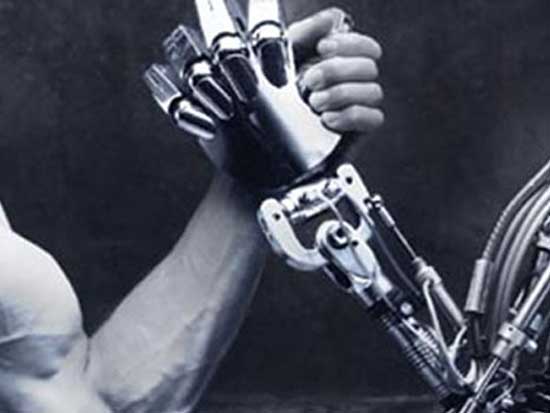
This post will roll you over comparing Artificial Intelligence and Intelligence Augmentation and use of each in some real-time applications.
What Qualifies as Intelligence Augmentation (IA)?
Intelligence Augmentation or IA is an alternative conceptualization of AI or Artificial Intelligence. It focuses on the assistive roles of AI, emphasizing the fact that it is introduced to enhance human intelligence rather than replace it.

Also known as Intelligence Amplification, Cognitive Augmentation and Machine augmented Intelligence, it focuses on the effective use of information technology in augmenting human intelligence. The Intelligence Amplification systems work to enhance the intelligence of humans to improve human decision – making function in some way.
It is also called as Assistive Intelligence that was designed partially from concerns and fears about Artificial Intelligence as a whole. With evolution of AI and it becoming more robust, there are increasing concerns about the technologies impacting human life in negative way.
Intelligence Augmentation seems safer to develop technologies and tools that gain their efficacy from human consciousness, rather than forming their own artificial sentience. The tools developed through Intelligence Augmentation can be used for different purposes, like electronic discovery, developing knowledge base, image processing tools, natural language tools, and more.
What exactly is Artificial Intelligence (AI)?
Artificial Intelligence, also known as machine intelligence, is intelligence illustrated by machines in contrast to intelligence showcased by humans. AI is an area of computer science that focuses the creation of intelligent machines that react and work like humans, and perform better. Some of the core activities computers with AI are designed for are
· Learning
· Problem-solving
· Planning
· Speech recognition
· Knowledge
· Reasoning
The subject of Artificial Intelligence is disputed as machines have become increasingly capable, tasks deemed to need ‘intelligence’ have been eliminated from the definition, which is a process known as the AI effect.
Artificial Intelligence was founded in 1956 as an academic discipline and over the years has witnessed numerous waves of optimism. AI has been divided into various subfields, with these subfields divided into technical considerations, use of particular tools, and even considering the social factors.
Artificial Intelligence vs. Intelligence Augmentation – The Differences
If we look, then the two are hot buzzwords and parts of the same coin, often used interchangeably.
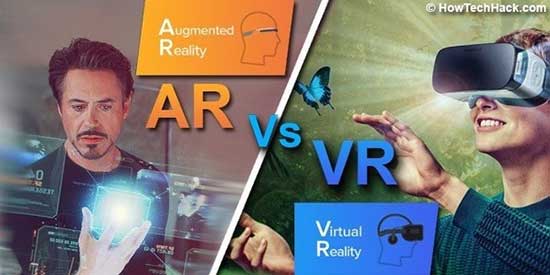
Though they are not the same thing, but the perception is that they can sometimes result in confusion. Both these terms crop up frequently, when the topic is analytics, Big Data, and waves of technological change that are sweeping across the world.
The best answer is,
AI is a broader concept of machines being able to perform out tasks in way that we would consider ‘intelligent or smart.’
And, Intelligence Augmentation is a current application of AI based around the idea that that we must really be able to give machine access to data and let them learn by themselves.
Artificial Intelligence in the workplace is an important IT mimicking cognitive functions like problem solving and learning. It can work wonders for various tasks like low-level admin, onboarding, booking meeting rooms or organizing a calendar. Also, AI can be extremely beneficial when it is about analyzing big data to enhance and accelerate business decisions, depending on the level of investment businesses make in their processing and computing power. The focus of AI is on the goal of using it to design autonomous systems to replace human cognitive functions.
Contrary to this, Intelligence Augmentation uses technology to support and complement human cognitive functions. While all the attention and noise has been on AI for numerous years, intelligence augmentation has been going about its job, which is to make jobs easier.
Intelligence augmentation utilizes machine-learning technologies, which are similar to AI but rather of replacing humans, it intends to assist them. So, rather than depending solely on machines for business procedures, IA machine-learning works in combination to the brain, each empowering the other. This makes it a highly compelling combination.
IA is a cognitive computing approach that covers a comprehensive set of capabilities like machine-learning, decision-based, and reasoning technologies. Just like Artificial Intelligence, the purpose of IA is to make the workplace more efficient and productive. But while AI intends to do this bypassing the humans, IA functions in partnership to the humans to support in new discoveries and problem solving.
Let us consider a simple example here:
We consider a machine-learning algorithm that can process huge amount of patient data searching through family history, patient history, previous tests, records, data from wearables, images, and etc. to predict the illness. But the information will be presented to the doctor in a way to support the doctor who would use her reason to reach a prognosis.
The human element involved, which is the doctor, is still involved implying it is IA and not AI. However, if the program that is sorting the data, reaches a prognosis itself, then it would be AI.
While Artificial Intelligence is never going to replace the knowledge work entirely, IA can make things much easier, time saving, and more efficient.
To make it clearer, consider these real-time applications of AI and IA in our daily lives.
Real-time Applications of Artificial Intelligence (AI) in Our Lives
1. Virtual Personal Assistants

Google Now, Cortana, and Siri are all intelligent digital personal assistants for various platforms like Android, Windows Mobile, and iOS. They help find valuable information when you ask them using your voice. For example, you can ask them “where is the nearest dentist?”, “What’s on my schedule today?” The assistant will respond by finding the correct information.
2. Fraud Detection
Have you ever received a letter or email asking you if you made a specific purchase on credit card? Most of the banks send such types of communications if they think there is a chance that fraud has been committed to your account. Artificial Intelligence is the technology deployed to monitor such kinds of fraud.
3. Online Customer Support
Large numbers of websites offer customers the chance to chat with a customer support representative while browsing. In most of the cases, you are talking to rudimentary AI. These chat supports bot amount to little more than automated responders, while some of them are actually able to extract knowledge from the site and present it to the customers when they ask for it.
4. Security Surveillance

A person monitoring different video cameras is not a very secure system. People get bored easily and it is difficult to keep track of multiple monitors. For this reason, training computers to monitor such cameras make a great sense. There are security algorithms, which can take input from security cameras and identify a threat.
5. Smart Home Devices
A large number of home devices now offer the ability to learn your behavior patterns and adjust the settings on your thermostat accordingly. As a result, you are able to gain more convenience and save energy. A good example of this is room heating thermostat, which you can switch on while leaving for work and on the basis of your return time, it adjust the temperature accordingly and help you enter into a comfortable room at the same time saving energy.
Real-Time Application of Intelligence Augmentation (IA) in Our Lives
1. Solving Complicated Surgical Procedures
Intelligence Augmentation technology could massively improve complicated medical procedures. Researchers across the world are developing tools and Cambridge consultants have determine potential solution by combining CT and MRI scans to build a 3D image of a person’s body and assisting surgeons to perform more precise surgical processes.
2. IA in Engineering

Manufacturing and production have been disrupted by innovative technology. IA has offered yet another tool for the maintenance and creation of complicated and expensive machines, making it simpler for engineers to carry out repairs. An example of this NGRAIN, which is a Canadian 3D imaging company that uses 3D analytics and scans to detect minor damage to aircraft and uses the information to repair operations and improve maintenance.
3. Intelligence Augmentation in Military
According to Dr. Tad Brunye, a senior research psychologist at NSRDEC, Intelligence Augmentation could be used in high fidelity visualization, enhancing situation awareness and hence mission planning. With 3D models, it is possible to carry out successful operations.
4. Intelligence Augmentation in Shopping Retail

A company named Aisle411 has integrated Intelligence Augmentation technology to create a shopping application for Walgreens. This application helps shoppers find product more easily. The application runs on a tablet links to the user’s shopping cart and uses Google Tango’s computer vision – driven 3D mapping service to guide in-store shoppers using a downloaded map. Additionally, customers can search item numbers, product categories, and product names by voice and command the mapping app to provide them store navigation instructions to the product’s exact location.
5. Intelligence Augmentation in Home Décor
One of the best home décor companies across the world, IKEA has launched an app on Apple’s ARKit platform using the IA technology. The app supports 2D and 3D image recognition and image tracking. With this technology, it is possible for users to move still photos of furniture and furnishings into a still image of a room. Also, it is possible to measure the dimensions of the room through the app and enable the user to drop an image of a piece of furniture into the photo from the curate catalogue of IKEA.
Bottom Line
At the end allow me to say, AI vs. IA is not a war. Both these technologies have important role to play in our lives. While IA is an assisted technology, AI is also a friendly technology that is here to be accepted for all future products. Definitely AI poses some challenges, but it is possible to combat most of these challenges through IA. Embracing and using the two technologies in a balanced way can definitely help us develop an environment, which is technologically advanced and far more beneficiary.
Filed Under: AI, Applications, Tech Articles
Questions related to this article?
👉Ask and discuss on Electro-Tech-Online.com and EDAboard.com forums.
Tell Us What You Think!!
You must be logged in to post a comment.