Are Electric Vehicles really the future of the automotive industry? Some battery-powered cars are already running quite successfully on the roads, breaking the prejudices and presumptions about the electric vehicles that were voiced in the early years of 21st century.
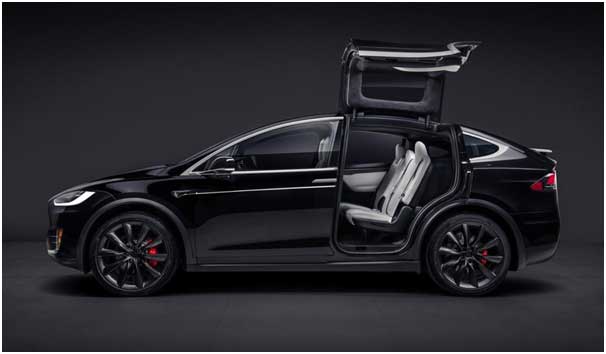
Fig. 1: Tesla Model X – Fastest Production Car at Present
According to LMC Automotive Forecast, by the year 2025, still the 85% of new cars in the USA will be powered by internal combustion engines. The share of electric cars by the year 2025, after a steady growth, will still be 15% in the region.
Despite predictions and assumptions, the automobile manufacturers are keen to develop and promote the Electric Vehicle as these vehicles are obvious future of the industry. At the end of 2015, there were already 550,000 Electric Vehicles on the roads of the USA. There are more than 100 new models of electric cars about to be launched in the next 5 years. The industry is just bracing for some miraculous trend which is expected against all odds. There are not just the industry expectations, sincere push by the governments all around the world to go green is another promoting factor for the electric vehicles (EV).
Does the future of the auto world attract you? Here’s exploring the present and future of EVs.
Why Electric Vehicles?
There are many factors that contribute to the apparent push for the EVs. The very first reason is to go green. Electric cars have no tailpipe emissions and their lifetime emissions are far lower when compared to a car running on internal combustion engine. With the present challenges of climate change and global warming, electric cars and vehicles are the only resort for the transportation industry. Countries like the USA have been reluctant to promote public road transport systems and majority of the people here commute by private vehicles. Now, the only way left to save our ozone layer is to reduce dependency on gasoline by switching to clean alternatives, which the obvious and immediate for the transportation industry is EVs.
Apart from the environmental challenge, there are many countries that want to reduce their oil imports for macroeconomic reasons. A genuine push to the EVs can greatly reduce their fiscal deficits and save their economies as well as currencies from the wrath of often volatile oil prices. Organization of the Petroleum Exporting Countries (OPEC) must note that.
Also, the electric cars have lot to offer in the price sensitive automobile market. The cost to run an electric car is almost one-third as compared to any gasoline car. Electricity prices are mostly stable and an electric car can be easily charged at home. The maintenance cost of EVs is also minimal. The stable and low electricity prices combined with low maintenance costs reduce the cost of the ownership of an EV to great extent.
What adds more to making EVs the true next generation commutes are that they are noise free, pollution free and high performance. They have less complex construction compared to gasoline cars. A car with internal combustion engine has complex engine and transmission system whereas electric cars have simple and compact assembly of battery power source, inverter and induction motor. The whole assembly of an electric car can be placed beneath the seats leaving even the bonnet space free for other use. The bottomline compact assembly of the electric cars also leaves scope for new innovative car designs and future concepts.
An electric car can have more innovative provisions for electronic accessories and sensors as the whole assembly of the car moves the focus to electrical from mechanical. The concept of driverless cars and connected cars can be better realized in an electric car rather than the traditional models. These cars are the realistic future of all the concept cars ever.
How far has the EV Tech come?
Electric car technology has come far since its inception though it is still in its infancy. The current models can run an average distance of 112 km/charge. And what more! The top speed of EVs is easily comparable to traditional gasoline cars. They have simple and efficient transmission system built upon induction motor and inverter that have least energy losses and no noise. The improvements in the new battery technology have been successful in producing battery packs that have high thermal stability and durability despite high content density.
The assembly of any electric car is far less complex and more compact leaving scope for better space utilization as well as low maintenance. Relying on electricity in case of pure electric cars, they have more efficient transmission and control system. The electric power transmission from inverter to an induction motor can be precisely controlled giving the driver ultimate and even the minute control of the car.
What are the challenges EVs face?
Despite breaking the prejudices, no electric car model is an all-rounder. There are still many challenges the EV industry faces. Some of the most prominent challenges to make electric cars consumer-friendly are:
Fast Charging: Despite vast improvements in battery technology, fast charging is still not achievable. One of the best in the segment, Tesla Model X, though being fastest production car, takes approx. 8 hours of home charging. Tesla is, however, continuously improving its battery technology for fast charging. Tesla has been quite successful in reducing cobalt content in its battery pack, increasing the nickel content, thereby achieving Nickel-Manganese-Cobalt ratio of 8:1:1. While the Tesla Model S used to have 11 kg of cobalt per car, the new Model 3 has just 4.5 kg of cobalt per vehicle. By reducing the cobalt content in the battery cells, not only better thermal stability will be attained, fast charging will also be possible.
Infrastructure: The electric cars though could be charged at home, there needs on-road charging stations due to low range of current electric cars. Even if the range of EVs gets better, the need for charging stations will be still there. However, the electric cars will have an advantage that even the street shops, garages and electric poles on road side can be turned into charging stations for them. The challenge will still persist in developing a country-wide infrastructure that facilitates supercharging for the electric cars.
Even with fast charging stations, another challenge will remain to manage queues at the stations. At a gasoline station, the tank of a car can be filled full in just a few minutes, while the electric cars even on supercharging will take around 30–60 min for full charging. Currently, Tesla Model X can charge to 50% in 20 min at a supercharging station.
Safety: Like the gasoline cars, the electric cars can also catch fire on accidents. The batteries can explode or catch fire in a crash. There still are needs to better the battery technology that ensures safety from fire accidents.
However, the use of batteries ensures safety in and of cars during collision. The battery packs used in electric cars are comparatively heavier and bulkier despite improvements in battery densities. The heavy battery pack sitting under the passenger cell lowers the center of gravity of the car, thus improving the stability and maneuverability of the car. Due to additional weight of batteries, passengers suffer lesser injuries in case of a collision, while a lighter car will make them suffer more. The high weight and big size of the battery pack, however, reduces the range and leads to longer braking distances.
Road-safety: The EVs are noise free cars so it is difficult for pedestrians to know if an electric car is approaching them. The USA has passed a legislation to regulate minimum sound level for electric cars by generating artificial sounds when approaching a pedestrian. However, the legislation is under dispute as electric car advocates terms such artificial sounds as contributors to noise pollution. Possibly, there can be anti-collision provisions to ensure road safety.
Cost: The current electric cars, though coming at one-third running cost, are too expensive to buy. The prime reason behind the high cost of EVs is the costly on-going research and development in the EV-technology coupled with low production and gradually increasing demand in the current market. Possibly, the on-going R&D with some sudden eventual rise in demand for EVs can lower their prices. The current models have the challenge to pass the litmus test to prove themselves the genuine successor of the auto world. The upcoming models will be consumer centered with all focus to meet the market expectations and obvious demands of regular commuters.
Proprietorship: The automobile industry lacks the concept of free technology transfer or license free technology. Some car manufacturers from developing countries are still struggling to hit the current EV industry benchmarks with their models rejected by consumers even after subsidies from the government. Despite a few manufacturers like Tesla and Nissan being successful in building standard EV cars, there is still a need of collective efforts beyond cut-throat competition to take the overall EV market to next level or just wait till there are eventually more players to end the monopoly.
Conclusion
Though a neck-to-neck competition runs between the current electric cars and their gasoline ancestors as far as the specs are concerned, at times the EVs are seen faring even better, there still are some realistic challenges that EVs need to take head on to trend in the industry.
Filed Under: ARM, Tech Articles
Questions related to this article?
👉Ask and discuss on Electro-Tech-Online.com and EDAboard.com forums.
Tell Us What You Think!!
You must be logged in to post a comment.