INTRODUCTION
As soon as we come across the word robot, we tend to imagine a metallic structure with arms and legs carrying a human-like appearance and running errands for our help. However, in actual terms, it’s just a machine operated externally or through a controller embedded within and doesn’t necessarily look like a human. Technically, robotics is a branch of Science and Engineering which deals with designing, constructing, and operating robots as well as computer systems for their control, sensory feedback, and information processing.
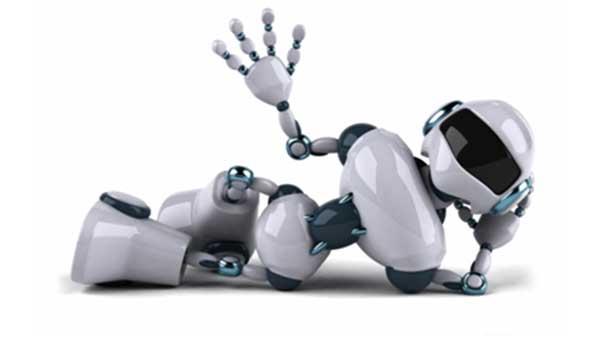
Figure 1: Introduction to Robotics
Interestingly, the concept is almost as old as the hills with the first robot dating back to 350 BC, built in the form of a mechanical bird, by a Greek mathematician named Archytas. Although the term was coined ages ago, the actual potential of the fully autonomous robotics was realised in the second half of the 20th century.
APPLICATIONS OF ROBOTICS
The primary objective of robotics was to just perform a set of complex tasks mainly in factories with parts of robots but now it has spread to a lot of fields. Today, we can find the following industrial applications of robotics -:
Military: It goes without saying that military operations involve a high level of risk and hence it makes sense to use machines so as to save human lives. There a lot of varieties of military robots namely UAVs (Unmanned Aerial Vehicles aka drones), UGVs (Unmanned Ground Vehicles) and UUVs (Unmanned Underwater Vehicles). These are used to locate the terrorists and launching attacks. There are even four-legged robots for carrying heavy arms and ammunition.

Figure 2: Four-legged Military Robot
You may also read: Robots in the Military
Education: Many schools and institutes are using robots to educate and engage the students for STEM programs (Science, Technology, Engineering, and Mathematics). There are a lot of kits available for students through which they can learn a lot about robotics. Not only this, but kids with autism and other behavioral disorders also find it more convenient to interact with robots and gain knowledge about various subjects.
Healthcare: Various kinds of robots are being developed to be used in hospitals to aid the doctors and nurses in taking care of the patients. There are robots that can disinfect a place, take care of the needs of the patients and even remove unwanted elements from the body without surgery. There is also a robot named da Vinci which helps in performing surgeries with precision which are difficult to perform manually.
Agriculture: Many small-sized robots are used in agricultural fields which are equipped with camera and sensors. These navigate through fields and detect the weeds and other kinds of infection. The sensors help in applying the spray only on the affected areas, thereby protecting the environment from the release of harmful chemicals in the air.
Factory: Industrial robots are evidently being equipped on a large scale in factories building heavy equipment. Factors like negative population growth in certain countries, the disinterest of the younger workforce to indulge in factory work and time-saving efficiency of robotic parts are determining the surge in the usage of industrial robots. The most common illustration that can be cited here is the automobile factories that build cars through robotic parts along with human workers.
Space: Several countries have built their own space robots carrying various shapes and sizes in order to explore the space. Some of them can’t even control their own weight on earth but work efficiently in space with excellent dexterity. Since there isn’t any gravity and certain situations are challenging for survival, these robots can be easily substituted in the space for capturing videos and for performing other routine tasks.

Figure 3: Mars Rover in Space
TYPES OF ROBOTS
From the heavy, metallic, and wired machines known as super robots to tiny devices known as nanobots, the field of robotics has been explored to a great extent. Enlisted below are the varieties of robots that have been designed lately. Let’s check out the list of some interesting forms of robots -:
Exoskeletons: It’s a technology where an electronic body suit offers limb movement and increased strength to the user. Primarily, these are used for the military purpose to lift heavy load and for patients suffering from spinal injuries.
Example: Ekso Bionics has developed full body ekso suits that can be worn by people who are victims of stroke or a spinal cord injury to get back on their feet. Originally developed for DARPA to be used by soldiers, these suits are also used in various rehabilitation clinics for patients with lower extremity weakness.
Humanoid robots: These are the robots that have a body resembling with a human containing a head, two arms, a torso and two legs. A subcategory of humanoids is known as Androids who appear much like a human with respect to the aesthetic aspects and can imitate the expressions of a human.
Example: Atlas is one of the most advanced humanoid robot developed by Google-owned Boston Dynamics. Although it’s not an android with human-like skin and expressions, yet it can do a lot of interesting stuff. It can walk in snow and re-balance itself just like us, open doors, lift boxes and even sense objects lying in front of it.
Animal Robots: Bio-inspired robotics is a fairly new category of robotics where the natural biological characteristics of living beings are replicated in the form of animal-inspired robotic models. The traits of animals like the way they hop, climb, walk or crawl is observed and then efforts are made to iterate them in a machine setup.
Example: There is a robot named Cheetah developed by Boston Dynamics that can gallop at more than 29 miles per hour. A similar robot with the same name is developed by MIT which can sense obstacles and jump over them while running at 13 miles per hour.

Figure 4: Cheetah Robot being tested in the lab
Rescue Robots: One of the most logical and sensible uses of robots is to deploy them in situations of disaster management for rescue operations. It takes a lot of courage as well as efforts to search and save the victims during a human or man-made disaster. Even though there have been instances when robots were designated for rescue operations but they failed to perform as per the expectations. It’s still considered as an emerging technology since there are a lot of challenges to be faced.
Nanobots: These tiny devices are designed to perform repetitive tasks with precision at nanoscale dimensions of a few nanometers or less. These are applied in the assembly and maintenance of sophisticated systems or for building devices, machines, and circuits at the atomic or molecular level. Besides, nanobots are equipped in healthcare for the purpose of drug delivery, destroying cancer cells, etc.
Swarm: Swarm robotics is much like imitating a group of insects or ants in the form of tiny devices crawling together and forming certain designs. These can be used in the fields like agriculture, rescue tasks or military operations.
Example: A swarm of 1,024 tiny robots was devised by Harvard University that could make certain formations like alphabets, five-pointed stars and other complex designs without any central intelligence.

Figure 5: Swarm Robots creating various formations
DARPA Robotics Challenge
DARPA Robotics Challenge i.e. DRC was conducted by US Defense Agency DARPA (Defense Advanced Research Projects Agency) which went on from 2012-15. The idea was to develop semi-autonomous robots that could help in rescue operations in a human-engineered environment. A lot of teams participated in the contest but only three of them were able to complete all the 8 tasks. The first price was bagged by Team KAIST with their robot DRC Hubo, followed by the runners-up IHMC and Tartan Rescue at second and third positions respectively.
The tasks assigned to the robots include driving a vehicle, walk through uneven rubble, clear debris, turn valves, connect hoses, open doors, drill a hole and climb up the stairs. Though these are easy for humans, the same is extremely complicated for robots. It takes hundreds and thousands of lines of coding to make the robot take just one step. Besides, humans started walking after multiple years of evolution and even now when a child is born, it takes more than a year to be able to walk with perfection. So, there are still a lot of challenges and obstacles that have to be handled.
CONCLUSION
Today there are plenty of robots carrying a variety of shapes, sizes, and structures but all of them are subject to certain challenges. For instance, the robots participating in DARPA contest were efficient in human-like tasks but they didn’t have a proper system to perceive their environment and were simply following instructions from the operator. Then there are mini robots like Darwin developed by ROBOTIS who are quite skilled in walking, playing football, and even get up after falling but then they can’t be put to use in applications needing physical strength. There is also a robot named Cozmo by Anki which can even express feelings and play but it’s merely for entertainment.
Moving on, there are certain implications of robotics that need to be discussed. It’s been a long-time notion that the development and deployment of robots are going to take away numerous jobs from the human workforce. However, Sherry Turkle who is a professor at MIT says that robots are not substitutes but companions of humans and their development would rather generate jobs.
Another concern is that we need to set a limit on the nature of tasks that are designated to the robots. It’s logical to use them at places which are too dangerous for humans to access but it also raises a big question that if anything goes wrong, who will bear the blame. Undoubtedly, technology has always offered numerous benefits and plays an important role in our life but it’s equally important to decide the limit of its usage.
You may read our Blog and Article section for more topics on electronics engineering, industry, and technology.
Filed Under: Tech Articles
Questions related to this article?
👉Ask and discuss on EDAboard.com and Electro-Tech-Online.com forums.
Tell Us What You Think!!
You must be logged in to post a comment.