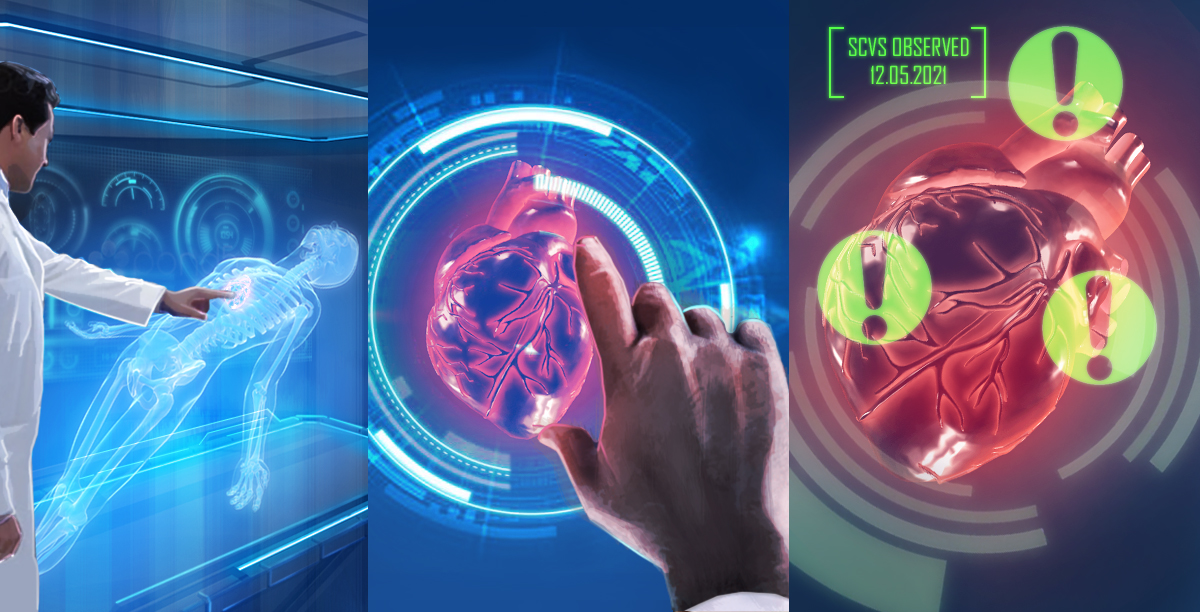
 Human-machine interface (HMI), or how clinicians and patients interact with technology, is at the very heart of medical care. In fact, HMI technology, robotics, functional electrical stimulation, and brain stimulation have been found to possess immense potential in speeding up recovery, improving patient monitoring, and saving lives.
There is no arena in medical treatment that does not employ machines. Right from the tiny pulse detector, pined like a clutch to your finger, to the challenging and sophisticated technology called Artificial Intelligence (AI), HMI technology is integral to the assessment, monitoring of patients and administration of treatment. It provides vital information and extraordinary benefits to patients and clinicians alike. HMI systems go a long way in improving communication in medical environments. With their help, medical professionals are able to communicate in a faster and more efficient way to ensure patients get the help they need.
HMI systems are distinguished by their portability and ease of operation. Irrespective of function, each system is equipped with clear, universal, and easy to understand features that speak of close collaboration between science and engineering. The human-technology partnership is continuously evolving and mutually beneficial. All this allows doctors to produce excellent results in diagnostics, patient care and monitoring. However, the rapidly-growing technology also needs careful scrutiny so that it does not dominate, but instead becomes an adjunct and support to clinical practice.
Latest Applications for HMI Ssystems
Neural Interface
Brain mapping or brain–computer interface (BCI) is emerging as a highly successful means to treat mental health issues, depression, Alzheimer’s disease, dementia, and paralysis by repairing human cognitive or sensory-motor functions. The neural interface involves implants wearable within and outside the body. Providing a direct communication pathway between a wired brain and an external device, signals from implanted prostheses can be handled by the brain like natural sensor or effector channels. Beginning with neuroprosthetic devices implanted in humans in the mid-1990s, we now have now advanced to neuroelectronics or neurochips that help stimulate and record from individual neurons grown on semiconductor chips. These tools can help patients convey basic needs, adjust bed position and HVAC (heating, ventilation, and air conditioning), and otherwise empower persons with disabilities to make life decisions and communicate.
AI-based diagnosis and treatment
A machine learning algorithm can compute disease 1000 times more and faster than traditional image receptors such as MRI, CT scan, and X-Ray. AI also helps upgrade radiology functions without the requirement of tissue or blood samples. Eventually no less than a ‘remote- revolution’ is taking place, almost by sending photographs of affected regions of their bodies, which a doctor can diagnose, treat, prescribe and advice follow-up action while sitting far away from the patient, by downloading machine language and images.

Machines can examine thousands of such medical images – and billions of pixels within them – to identify the presence of a disease or estimate its aggressiveness, likelihood of survival or potential response to treatment. Quick analysis of massive volumes of data helps in achieving real-time medical condition assessment, point-of-care interventions and appropriate clinical decision-making.
In a Stanford study, machines were found to be just as accurate as trained dermatologists in distinguishing skin cancers from benign lesions in 100 test images.
Another Google study based on deep learning used high-resolution photographs of the retina to accurately identify which patients had diabetic retinopathy – a medical condition in which damage occurs to the retina due to diabetes mellitus.
Robotic surgery
Robotic or Robot-assisted surgery is a type of minimally invasive surgery. It integrates advanced computer technology with the experience of a skilled surgeon who performs surgery using very small tools attached to a robotic arm. Getting a 10x magnified, high-definition, 3D-image of the body’s intricate anatomy, the surgeon controls special surgical tools and the camera from a console located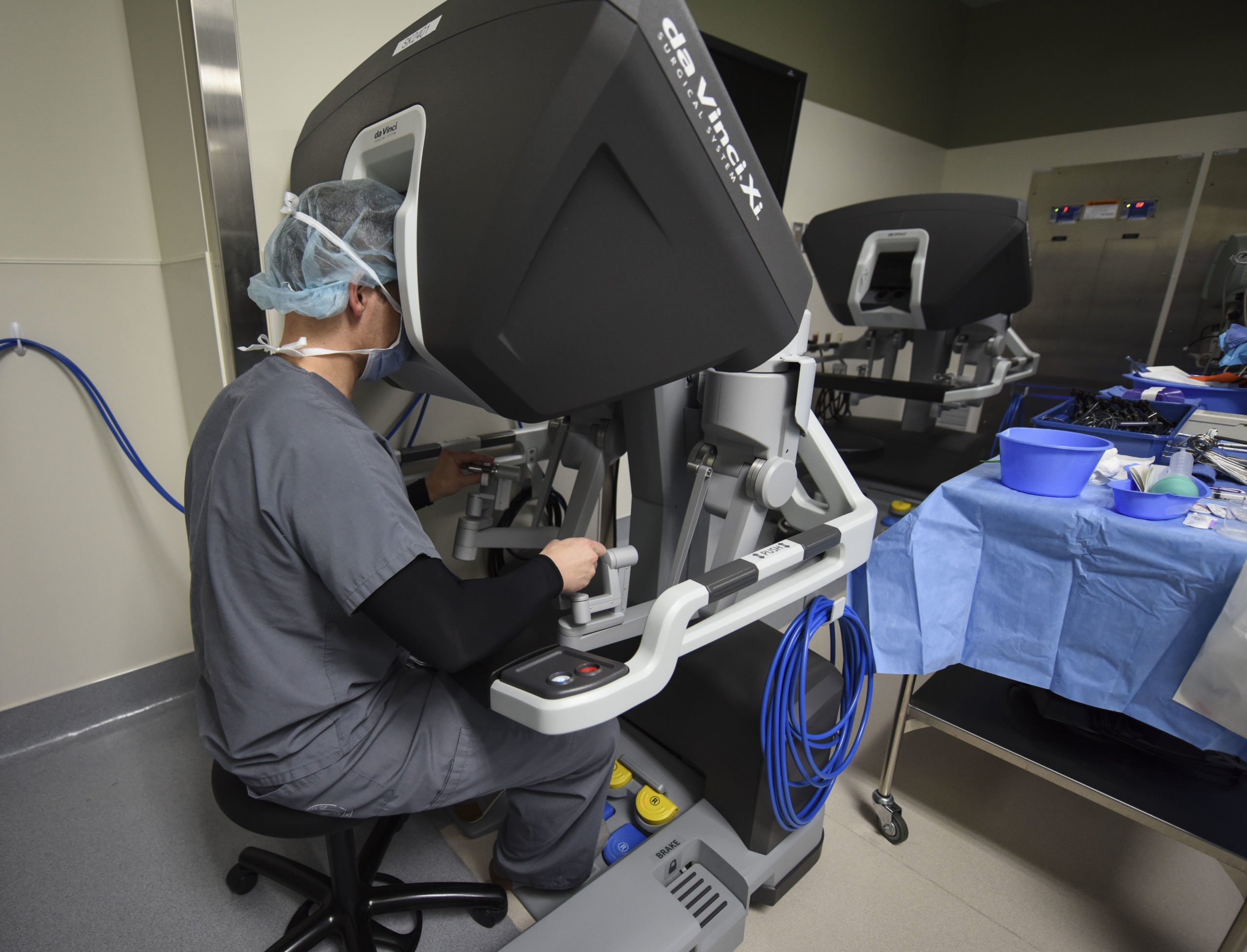 in the operating room. As the robot substitutes the surgeon’s hand movements, the latter can perform many types of complex procedures with enhanced precision, flexibility and control during the most complex procedures.
Coping with critical illnesses
According to a paper recently published in the journal Brain, HMI technology, healthcare robotics, and brain stimulation are immensely useful in rehabilitation of stroke patients.
A team of Swiss researchers noted that, these technologies, when used together and personalised for the individual patient, can improve severe chronic stroke recovery,
The most common result of a stroke is impaired upper arm function, which affects daily tasks and quality of life. Neurotechnology-aided upper limb rehabilitation was found to be promising for severe chronic stroke patients.
The research team has begun a clinical trial using a personalised therapy approach with the goal to improve stroke recovery by using a combination of new personalized, neurotechnology-based therapies.
Automated workflow and supervision
Medical industry gains to save $18 billion by way of machine regulated workflows and administrative tasks. AI-powered software comes handy in medical transcription (speech to text translation); symptom-based medical prescriptions and compiling health-charts of patients. Based on genetic makeup of patients, doctors can select and earmark right diagnosis despite limited access or explanation of symptoms by patients. An entire medical history can be deduced by machines, devices and implants that help gauge overall health, going beyond monitoring heart rate and blood pressure.
Patient monitoring system: Comprising devices configured to adhere to the skin of the patient and measure electrocardiogram data, impedance data, accelerometer data, blood oxygen data and temperature data, patient monitoring system can communicate wirelessly with gateways and a local processor system. The local processor system is configured to customize alerts for the patient. It notifies automatically a specialist in response to unusual changes in the condition of a patient. The customized alert is sent based on a unique device identifier.
The machines procure digital information of heart rate, respiration, blood pressure and other vital signs in the body. Thus, monitoring machines minimizes time spent in doctors’ presence.
Worldwide web of clinical databases
Organisation such as the World Health Organization (WHO) and the Centers for Disease Control and Prevention (CDC) administer and amass huge quantity of data on health, disease and substance abuse required for their research and referral programs. Their analysis helps in resolving and uprooting any foreboding of spreading diseases in the nip through measures culled out from a composition of preventive data collected in the electronically stored data-bank.
Digital Health Records
The daily functioning of every hospital including the mushrooming state-of-the-art, multi-specialty hospitals depends on a complex network of men and machines.
Electronic Health Records (EHR) is a crucial technology driven segment in the medical industry. Health records of patients are digitally lodged and availed for scrutiny by doctors. It alerts them to any clinical deficiencies, discrepancies in past and present multiple treatment records, and helps to avoid overlap and side-effects of medicines during diagnosis and prescription.
Special software minutely detailing patients’ previous appointments and treatment records forms the basis of diagnosis, prescription and start or follow-up of treatment. Hospitals cannot function without their IT professionals’ backup, their managers and executives who rely heavily on computerised networking. So, they are provided with independent servers and electricity backup to run the system including taking care of supply and resource inventories, personnel duties scheduling and electronic surveillance.
Summing up
No doubt, technology has become a critical part of healthcare, but there is a need to become its master, not its servant. Machines should not overshadow, overwhelm and intimidate patients with inappropriately invasive and aggressive treatment, leaving them to face critical illness and death in unfamiliar and technically sophisticated settings. The human aspects of patient care should not be missing and there should be respect for the quality of the patient’s life.
According to Marjorie Funk of Yale University School of Nursing, clinicians need to become proficient with the technology and then transcend it to use it as a vital tool in providing holistic care. They should feel comfortable with the machines, and feel safe enough to devote more time and attention to patient’s comfort. The power that technology confers requires that doctors use it appropriately, safely, equitably, and humanely. The challenge is to minimise the human cost of technological advancement, ensuring prudent and equitable application of technology in patient care.
Filed Under: Tech Articles
Questions related to this article?
👉Ask and discuss on EDAboard.com and Electro-Tech-Online.com forums.
Tell Us What You Think!!
You must be logged in to post a comment.