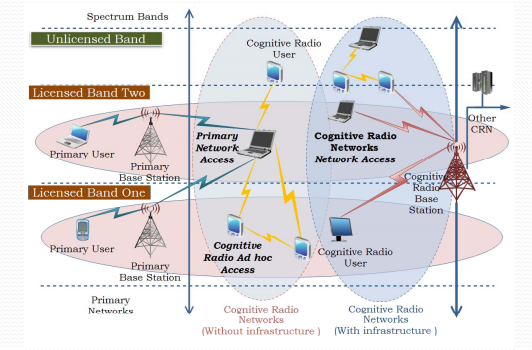
Fig. 1: Diagrammatical Image Showing Electromagnetic Radio Spectrum
The electromagnetic radio spectrum is a natural resource which is licensed and allocated by the government for the use of transmitters and receivers. A spectrum is a collection of wavelengths of radio frequency waves which are available for wireless communication services. These wavelengths are broken down and brackets of these (called ‘Bands’) are allocated for various purposes such as GSM/HSPA, 3G, 4G, TV, Wi-Fi, defense communication, radio broadcasting, mobile satellites, aeronautical satellites, etc. The electromagnetic spectrum is a resource which cannot be depleted but can be over crowded in some bands more than the others due to this static allocation. The more heavily used telecom operator bands tend to be over crowded while some of the other bands such as TV or radio broadcasting are mostly vacant. This causes an inefficient use of spectrum leading to the poor quality of signal in the crowded bands while much of the under crowded bands are gone unused. The underutilization of such electromagnetic spectrum leads to what are called as “Spectrum Holes” (a band of frequencies which are assigned to a primary user, but at a specific time and location are not being utilized by that user).
To make the spectrum utilization more efficient, a secondary user, who is unable to be serviced by his band, can be allowed access into a spectrum hole at the correct time and geographic location. This type of dynamic allocation can be done by the “Cognitive Radio” which uses a Software Defined Radio (SDR) by efficient allocation of spectrum by the utilization of the spectrum holes in one band to compensate the overcrowding of another band. In this article we will define a cognitive radio and why we need it and dive into the technology that goes into making it work.
History of Cognitive Radio
The need for the development of a cognitive radio has contributed by many factors the major of which being the steady increase in the requirement of radio spectrum with the increase in wireless communication at high communication speeds and stronger signals. In the year 2000, there was a fireworks factory explosion in the Netherlands in which 23 people were killed, injured many people and destroyed a lot of property. During this crisis the emergency hotlines faced serious communication issues and caused further deterioration and destruction. The same problem was faced during 9/11 in the USA in the year 2001. These devastating incidents pushed intellectual and academic societies to work towards the development of a better management system of the scarce resource that is the electromagnetic spectrum. Towards this, the UK stepped up first in 2002 through a report by Professor Cave which detailed the possibility of selling spectrum upon the bandwidth required. Many developments and research has been done in the field of communications. The actual word ‘Cognitive Radio’ was coined by Joseph Mitola in 1999 in a wireless communications seminar on the same at the Royal institute of Technology, Sweden.
CR Technology
Cognitive radio includes four main functional blocks
-
Spectrum Sensing
-
Spectrum Management
-
Spectrum Sharing and
-
Spectrum Mobility
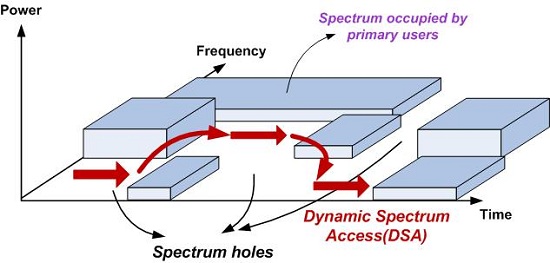
Fig. 2: Diagram Explaining Cognitive Radio Concept
Spectrum Sensing will determine the spectrum availability and the presence of the licensed users (also known as primary users). Spectrum management will predict how long the spectrum holes are going to remain open for use of the unlicensed users (also called the secondary users or CR users). Spectrum Sharing is meant to allocate the spectrum holes equitably among the secondary users bearing in mind the usage cost. Spectrum Mobility is to ensure and maintain the seamless communication requirements during the transition to lighter spectrum. The spectrum sensing function is the most crucial to establish a cognitive radio network. There are some techniques used for spectrum sensing, which are; Primary transmitter detection, cooperative detection and interference detection. The reason that spectrum sensing is the most crucial task is that there are many uncertainties connected while picking up the signals to find the holes in the band like Channel Uncertainty, Noise Uncertainty, Sensing Interference Limit, etc. So, these uncertainties need to be addressed while solving the problem that is spectrum sensing in cognitive radio networks.
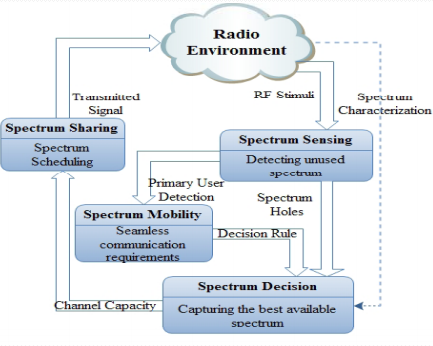
Fig. 3: Cognitive Radio Network Cycle
Spectrum-Sensing
Therefore, the major challenge in spectrum sensing is that the secondary users have to detect the presence of the primary users in the licensed spectrum and quit the frequency band as quickly as possible if the corresponding primary radio emerges so that the primary user does not face any interference. This is the first and most important step in implementing the CR system. The Spectrum sensing techniques are classified into 3 main types, Transmitter Detection (Non Cooperative Sensing), Cooperative Sensing and interference based testing. Below are the descriptions of the first two sensing techniques.
Transmitter Detection
In transmitter detection there is a further classification into Energy Detection, Matched Filter detection and Cyclostationary feature detection. The energy detection method detects the primary signal based on the sensed energy. The signal is passed through a band pass filter and is integrated over a time period. The output is tested against a threshold which is predefined. This reveals whether a primary user is present or absent. A match filter is a linear filter and is used when the secondary user has a prior knowledge of the primary user signal. It provides more accuracy at the expense of being more complex.
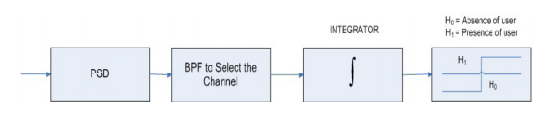
Fig. 4: Block Diagram Showing Energy Detection Sensing Process

Fig. 5: Block Diagram Explaining Matched Filter Sensing
Cooperative Techniques
Higher sensitivity requirements on the CR user if multiple CR users cooperate in sensing the channel. Therefore it will be shared and compared among various CR users to sense a signal
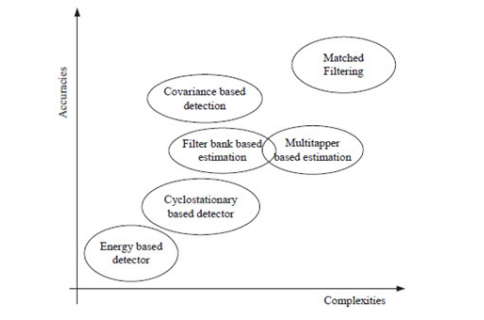
Fig. 6: Accuracies Vs Complexities Compariison Between Various CR Technologies
Spectrum Management
It captures the best available spectrum to meet the secondary user’s requirements, simultaneously not creating an interference to the primary user and then transmit within the spectrum hole which is allocated through the spectrum sensing. Often there are multiple choices presented by the spectrum sensing function but it is the function of the spectrum management system to decide which option is the optimum choice. Spectrum management is carried out in two primary steps
-
Spectrum Analysis (Comparing the options)
-
Spectrum Decision (Choosing the best option)
Future of Cognitive Radio
The success of the unlicensed band to accommodate a wide range of wireless devices and services has inspired the FCC (Federal Communications Commission) in the USA to open up more unlicensed bands. The telecommunications authority in the USA has realized the capability of the CR technology and hopes to open up unlicensed bands which will exploit the inefficiently utilized licensed bands given that the primary users do not undergo interference. An example would be the utilization of radios to operate on TV broadcasting bands. Although TRAI (Telecom Regulatory Authority in India) is yet to utilize the CR networks due to worry over certain security issues such as; Protection against protocol attacks, application attacks, unauthorized user introduction, unauthorized access to system data, Denial of Services (DoS) and Distributed Denial of Service (DDoS) attacks. Yet much research and funding is being directed towards Cognitive Radio to tackle the serious problem of Spectrum overcrowding even more so that India is now becoming a global hub for Information Technology and Services.
You may also like:

Filed Under: Applications, Articles, Tech Articles, Wireless
Questions related to this article?
👉Ask and discuss on Electro-Tech-Online.com and EDAboard.com forums.
Tell Us What You Think!!
You must be logged in to post a comment.