Artificial intelligence (AI) chips have become essential for powering various advanced device features, especially in smartphones. A few AI examples related to a phone’s camera include:
- Adjusting camera settings for optimal results
- Applying filters in real-time while capturing photos or videos
- Tracking moving objects in real-time, keeping them focused for the shot
- Identifying scenes in photography and automatically adjusting them
- Creating blurred backgrounds or making subjects stand out
- Enhancing images taken in low-light conditions by reducing noise, improving brightness, and correcting blurs
Another significant role of AI in mobile devices is voice recognition and analysis. AI can improve the accuracy of voice recognition, even in noisy environments. It enables voice assistants to better understand and respond to complex commands and questions. Additionally, it can interpret the context of conversations, allowing it to provide more relevant and tailored responses.

Artificial Intelligence (AI) is also widely used in smartphones for biometric authentication and face recognition. It enhances the accuracy and security of fingerprint and iris scanning while enabling quick and reliable facial recognition for unlocking devices and accessing other security features. It can also learn user preferences to provide personalized recommendations for apps, content, and settings. By analyzing usage patterns, it helps optimize battery usage, extending the battery life of the device.
AI plays a critical role in predictive text, allowing it to anticipate what users intend to type and auto-fill text, making typing faster and more accurate. It also enables real-time language translation, facilitating seamless and efficient communication. Moreover, AI improves graphics rendering and creates more immersive gaming experiences. In AI-powered games, it makes characters smarter and more realistic, enhancing gameplay quality.
These advancements are made possible through the integration of AI chips in smartphones. Mobile-specific AI chips play a critical role in enabling advanced features across various smartphone functions and applications.
In this article, we’ll discuss the top mobile AI chips expected to launch in 2025 and compare their features and performance.
The top mobile AI chips
The top mobile AI chips expected to debut this year include:
- Apple A19 Bionic
- Qualcomm Snapdragon 8 Gen 4
- Google Tensor G5
- MediaTek Dimensity 9400
- Exynos (Samsung)
Apple A19 Bionic is set to launch in the fall of 2025 and is likely to power the iPhone 17 series. This chip will feature a significantly enhanced Neural Engine for on-device AI processing. Unlike its predecessors, the A18 and A17 Pro (built on TSMC’s 3nm technology), the A19 will leverage TSMC’s advanced 2nm process, resulting in higher transistor density for improved performance and power efficiency.
 Architectural enhancements and higher clock speeds are expected to make the chip faster and more responsive for general tasks, app launches, and multitasking.
The A19 Bionic is likely to include a more powerful GPU with architectural improvements or an increased core count, delivering better graphics performance for gaming, AR/VR applications, and video editing. Significant upgrades to the Neural Engine will enhance computational photography, on-device generative AI capabilities, and natural language processing, allowing for more personalized user experiences. The chip may also feature specialized hardware accelerators to boost AI performance for specific workloads.
This AI chip is expected to support LPDDR5X or even LPDDR6 RAM, enabling faster data access and improved overall system performance. An upgraded 5G modem will deliver faster cellular speeds, while improved Wi-Fi capabilities will enhance connectivity. Thanks to process technology and architecture advancements, the chip will also achieve better power efficiency, leading to longer battery life for A19-powered iPhones.
In terms of features, the A19 is poised to advance AI-powered photography with improved scene recognition, object tracking, portrait mode, and low-light performance. Upgrades to Siri will likely include better natural language processing, contextual awareness, and predictive capabilities. The enhanced performance of the chip is expected to enable more immersive AR/VR experiences.
Additionally, with AI adapting to user behavior and preferences, the A19 will pave the way for more intuitive and customized interactions. The chip may even support running large language models and AI-powered creative tools directly on the device.
Qualcomm Snapdragon 8 Gen 4, the company’s latest flagship mobile platform, is expected to launch in the first quarter of 2025. It introduces the Qualcomm Oryon CPU, a custom-designed architecture replacing the ARM Cortex cores of earlier generations.
 The CPU is reported to feature a configuration of two high-performance cores (Oryon Phoenix L) clocked at 4.32GHz and six efficiency cores (Oryon Phoenix M) running at 3.53GHz. Built on TSMC’s advanced 3nm process, the Snapdragon 8 Gen 4 promises better transistor density, improved performance, and superior power efficiency.
Significant upgrades in AI and machine learning are anticipated, with an enhanced Hexagon Processor and a more powerful Tensor Accelerator designed for generative AI tasks. The Adreno 760 GPU delivers a 56% performance improvement over the Adreno 750 in the Snapdragon 8 Gen 3, providing exceptional graphics performance for gaming, AR/VR, and other visually intensive applications. The Spectra ISP is also expected to support higher-resolution cameras and improved image processing, pushing computational photography to new heights.
Connectivity improvements include the Snapdragon X80 5G modem for faster speeds and the FastConnect 7900 system, supporting Wi-Fi 7 and Bluetooth 5.4. The platform also optimizes gaming with features like super-resolution, frame rate adjustments, and intelligent AI-powered game interactions. Enhanced network performance will contribute to better call quality and overall connectivity.
With an expected AnTuTu score exceeding three million and notable gains in single-core and multi-core Geekbench performance, the Snapdragon 8 Gen 4 is set to elevate user experiences through features like predictive text, context-aware applications, and advanced AI-powered tools.
Google Tensor G5 also has a planned 2025 fall launch, succeeding the Tensor G4 with the Pixel 9 series from 2024. Unlike its predecessors, Samsung’s Tensor G5 is rumored to use TSMC’s 3nm process, offering enhanced performance and efficiency. The chip will feature a new CPU configuration based on leaks: one prime core clocked at 3.4GHz, five mid-cores at 2.86GHz, and two efficiency cores at 2.44GHz. This arrangement aims to balance high performance with energy efficiency.
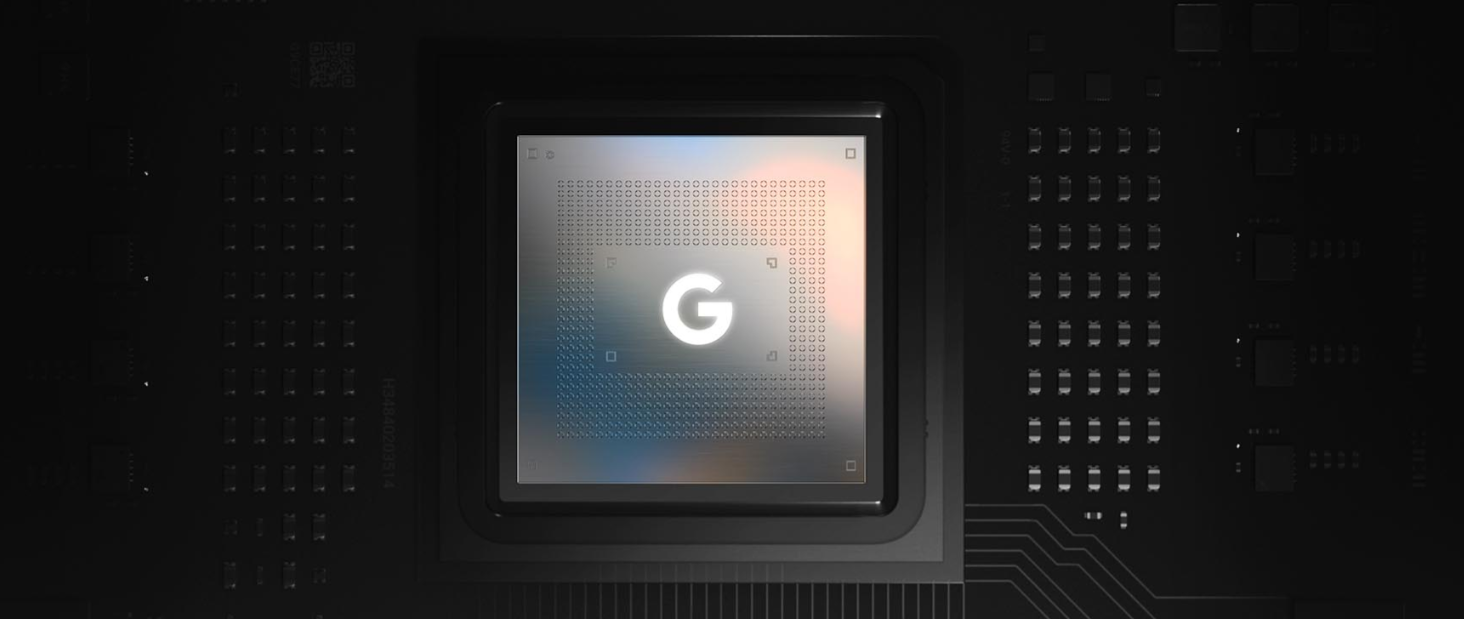 One of the significant changes in the Tensor G5 is the predicted inclusion of a PowerVR DXT GPU from Imagination Technologies, replacing the ARM Mali GPUs used in earlier Tensor models. The NPU is also expected to deliver a 14% boost in AI task performance, solidifying its focus on on-device AI processing. The chip will also likely include an integrated 5G modem for fast and reliable cellular connectivity.
The Tensor G5 is expected to enhance features such as Google Assistant, improving its natural language understanding, contextual awareness, and ability to handle more complex tasks. It also refines computational photography, enabling better image processing and camera functionality. Designed specifically for Google’s ecosystem, the chip will support features like live translation, photo unblur, call screening, and the magic eraser, offering deeper integration with Google services and AI-powered cloud applications.
Leaked Geekbench scores suggest the Tensor G5 achieves 1,323 in single-core and 4,004 in multi-core tests. While the PowerVR DXT GPU is anticipated to improve graphics performance compared to previous Tensor chips, it may still trail behind GPUs from competitors like Apple and Qualcomm.
MediaTek Dimensity 9400, the successor to the Dimensity 9300, was launched in November 2024. The OPPO Find X8 and Find X8 Pro smartphones are among the first to feature this chip globally. An upgraded version, the Dimensity 9400+, is slated for release in early 2025.
 Built on TSMC’s advanced 3nm process, the Dimensity 9400 introduces an innovative “all-big-core” design, using only high-performance cores (1x Cortex-X925, 3x Cortex-X4, and 4x Cortex-A720), marking a shift from previous designs that balanced performance and efficiency cores.
The chip incorporates the Immortalis-G925 MC12 GPU, delivering a significant improvement in graphics performance over the Immortalis-G715 MC10 from the 9300. With the 8th Gen NPU, the chip achieves notable advancements in AI processing, supporting tasks like on-device LoRA training and high-quality video generation.
The chip supports LPDDR5X memory at speeds up to 10,667 Mbps and features a 5G modem with support for the latest standards alongside Wi-Fi 7 for fast, reliable wireless connectivity. It’s optimized for on-device generative AI, enhancing capabilities like image editing, text-to-image generation, and AI-powered video creation.
Dimensity 9400 also enhances camera functionality with improved scene recognition and image processing, while its AI-driven agents deliver more personalized and intuitive user interactions.
In benchmarks, the Dimensity 9400 achieved an AnTuTu score of 30,06,345, with the OPPO Find X8 Pro showing a slightly lower score of 28,80,558 — still a marked improvement over its predecessor.
The Geekbench scores reveal strong performance, with a single-core score of 2,755 and a multi-core score of 8,519, representing a notable step forward from the Dimensity 9300. In AI Benchmark, the chip’s 8th Gen NPU scored an impressive 6,773, outperforming the Snapdragon 8 Gen 3. The Immortalis-G925 MC12 GPU excelled in 3DMark’s Steel Nomad Light test, surpassing the Apple A18 Pro and Snapdragon 8 Gen 3 in graphics performance.
While it may not surpass the Apple A18 Pro in every area, the Dimensity 9400 competes against leading chips like Qualcomm’s Snapdragon 8 Gen 4, establishing itself as a strong contender in the flagship mobile chipset market.
Samsung Exynos 2400 is expected to debut in early 2025. Breaking away from the octa-core designs of its predecessors, the Exynos 2400 will feature a deca-core architecture with a tri-cluster setup, including 1x Cortex-X4 prime core, 5x Cortex-A720 mid-cores, and 4x Cortex-A520 efficiency cores.
 The chip will also incorporate an AMD RDNA 3-based Xclipse 940 GPU, delivering a significant graphics performance boost over earlier Exynos GPUs. Its enhanced Neural Processing Unit (NPU) is reported to provide a 14.7x improvement in AI performance compared to the Exynos 2200. Manufactured on Samsung’s 4nm process, the chip may also leverage Fan-out Wafer Level Packaging (FOWLP) for better thermal management and signal efficiency.
The Exynos 2400 is designed to directly support large language models and AI-powered creative tools on the device. Improvements to Bixby will enable more advanced voice assistance, personalized recommendations, and a seamless user experience. Its deca-core design will enhance gaming capabilities with smoother gameplay, realistic visuals, and AI-driven game optimizations. Moreover, AI will improve network performance, call quality, and other connectivity features.
Comparison
All the chips discussed — except for the MediaTek Dimensity 9400, which launched in November 2024 — are expected to arrive in 2025. A comparison of these mobile AI chips based on leaks and reports highlights their unique strengths and innovations.
The table below provides a side-by-side evaluation of their key features and performance metrics.
 The benchmark scores of the top mobile AI chips (based on leaks and speculation) compare as follows…

Based on early speculations and a few leaks, the MediaTek Dimensity 9400 currently leads in AnTuTu scores, showcasing strong overall performance. Meanwhile, the Snapdragon 8 Gen 4 excels in Geekbench single-core and multi-core benchmarks, highlighting its CPU capabilities.
The Apple A19 Bionic is anticipated to deliver top-tier performance, though specific scores have not yet been released. The Google Tensor G5 shows lower benchmark numbers in comparison, but Google appears to prioritize real-world AI efficiency and task optimization over raw performance metrics. The Exynos 2400 is expected to offer competitive results, narrowing the gap between Qualcomm and MediaTek in general and AI-specific performance.
It’s important to note that these are early estimates derived from leaks and reports, and actual benchmark results may vary post-launch. Additionally, benchmark scores are not the sole indicators of AI performance. Factors such as on-device AI capabilities, power efficiency, and software optimization are equally critical in determining real-world effectiveness and user experience.
You may also like:






Filed Under: Tech Articles
Questions related to this article?
👉Ask and discuss on EDAboard.com and Electro-Tech-Online.com forums.
Tell Us What You Think!!
You must be logged in to post a comment.