Engineers Garage

  • Electronic Projects & Tutorials
    • Electronic Projects
      • Arduino Projects
      • AVR
      • Raspberry pi
      • ESP8266
      • BeagleBone
      • 8051 Microcontroller
      • ARM
      • PIC Microcontroller
      • STM32
    • Tutorials
      • Audio Electronics
      • Battery Management
      • Brainwave
      • Electric Vehicles
      • EMI/EMC/RFI
      • Hardware Filters
      • IoT tutorials
      • Power Tutorials
      • Python
      • Sensors
      • USB
      • VHDL
    • Circuit Design
    • Project Videos
    • Components
  • Articles
    • Tech Articles
    • Insight
    • Invention Stories
    • How to
    • What Is
  • News
    • Electronic Product News
    • Business News
    • Company/Start-up News
    • DIY Reviews
    • Guest Post
  • Forums
    • EDABoard.com
    • Electro-Tech-Online
    • EG Forum Archive
  • DigiKey Store
    • Cables, Wires
    • Connectors, Interconnect
    • Discrete
    • Electromechanical
    • Embedded Computers
    • Enclosures, Hardware, Office
    • Integrated Circuits (ICs)
    • Isolators
    • LED/Optoelectronics
    • Passive
    • Power, Circuit Protection
    • Programmers
    • RF, Wireless
    • Semiconductors
    • Sensors, Transducers
    • Test Products
    • Tools
  • Learn
    • eBooks/Tech Tips
    • Design Guides
    • Learning Center
    • Tech Toolboxes
    • Webinars & Digital Events
  • Resources
    • Digital Issues
    • EE Training Days
    • LEAP Awards
    • Podcasts
    • Webinars / Digital Events
    • White Papers
    • Engineering Diversity & Inclusion
    • DesignFast
  • Guest Post Guidelines
  • Advertise
  • Subscribe

Insight – How Tubular Solenoid Works

By Ashutosh Bhatt March 15, 2013


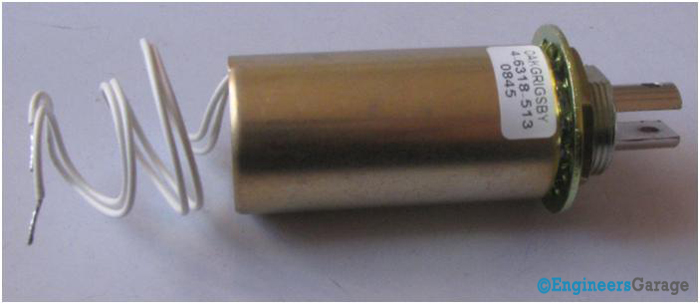
Solenoids are a well known application where magnetic fields are used to create controlled magnetic force. Solenoids are used in various industries where they serve the purpose of hydraulic valves, current limiting switch, steering control of heavy machines etc.   This version of Insight details with DC operated tubular solenoid which is often used as an actuator. Comprising of a metallic can, coil, soft iron cored plunger along with insulator coating and connecting wires, linear solenoids are almost noiseless. 

Depending upon the movement of the plunger, these solenoids can be divided into push type (where plunger goes inside the metallic can) and pull type (plunger comes out of the tin can). Tubular solenoids can work for longer hours without getting their coil overheated or burnt out.  Let’s find out what more constructional and operational features of one such tubular solenoid in this Insight. 
Tubular Solenoid

Fig. 1: Image Showing Tubular Solenoid Plunger Inside Tubular Solenoid Cavity

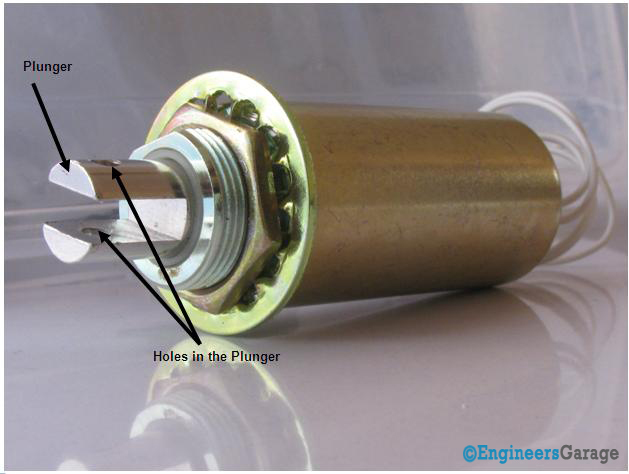
Image1 shows the plunger of the solenoid placed in the solenoid cavity. Made out of soft iron with nickel coat, plunger works as an actuator for the solenoid. The movement of the plunger defines solenoid to be a pull or push type. The one in the Insight is a pull one because the plunger goes inside the solenoid cavity when energized.

There are two holes in the plunger through which the load can be attached to the solenoid. In the resting state, the plunger is partially out of the metallic can and in the energized state the plunger gets attracted towards the can (due to magnetic field) and is pulled inside it.
 

Tubular Solenoid Shaft

Fig. 2: A Closer Look At Tubular Solenoid Plunger

External Features

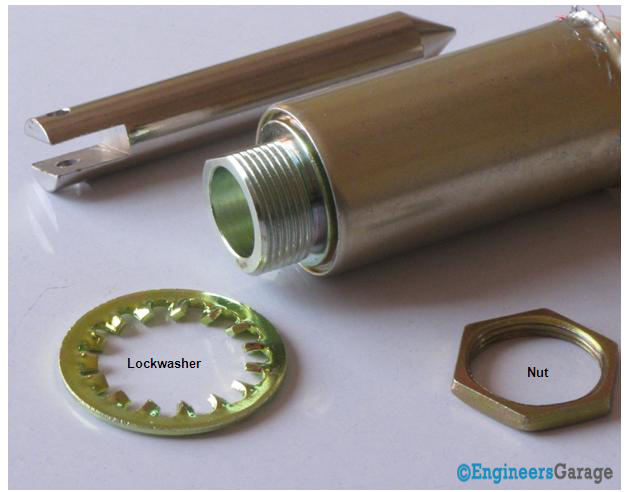
Along with the plunger, two more parts are seen near it: “the nut and the lock washer”. They find their utility when solenoid is mounted on a surface or integrated with a machine.
 

Nut and Lockwasher

Fig. 3: Image Showing Various Parts of Tubular Solenoid

When the plunger, bolt and nut washer are taken out, the internal structure of the solenoid cavity is seen. A metallic container is placed on the outside and a plastic layer is placed on the inside.
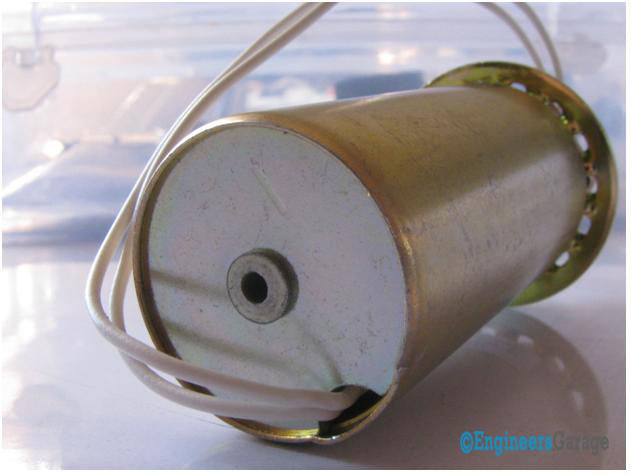
 

Tubular Solenoid

Fig. 4: Connecting Wires Emerging From Sides of Tubular Solenoid

Connecting wires emerge from the other side of the solenoid. The wires are connected to the copper coil and carry current which creates a magnetic field.  So, on one end, we see the cavity, on other, wires are emerging out. Where do the wires get connected?
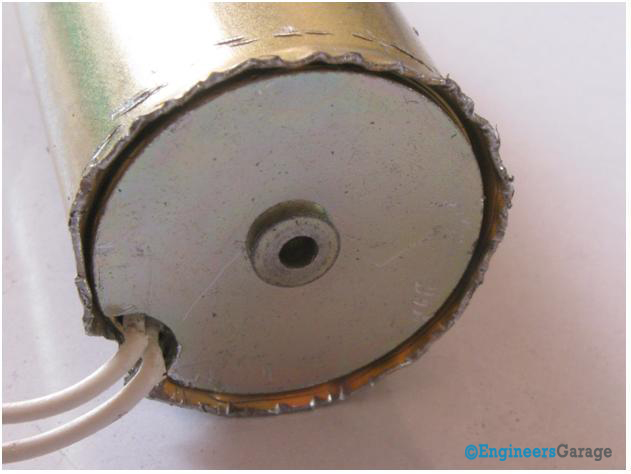
 

Opening a Tubular Solenoid

Fig. 5: Closer Look At The Sides of Tubular Solenoid

Insulation
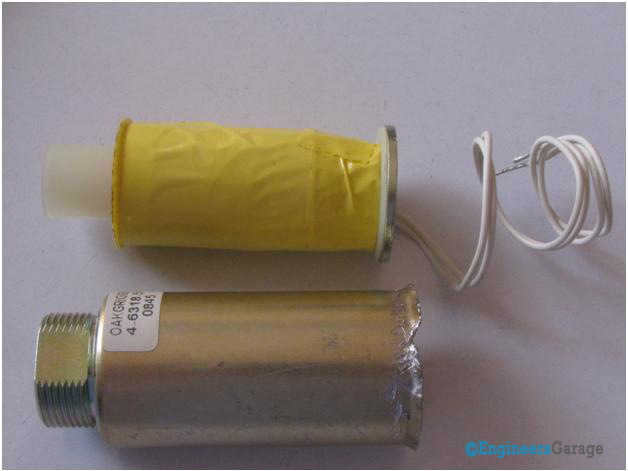
 

Tubular Solenoid Insides

Fig. 6: Image Showing Insulation Setup Inside Tubular Solenoid

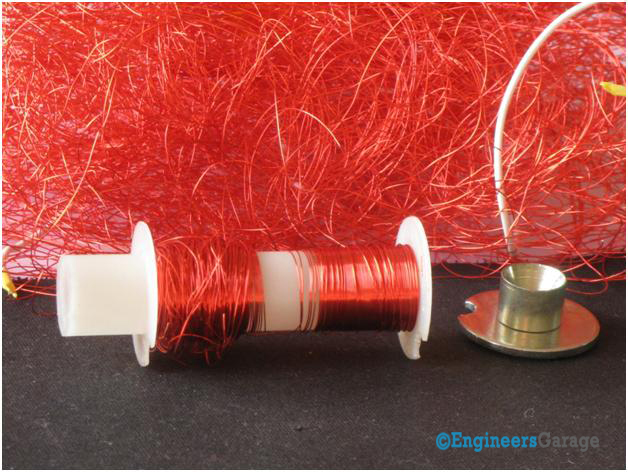
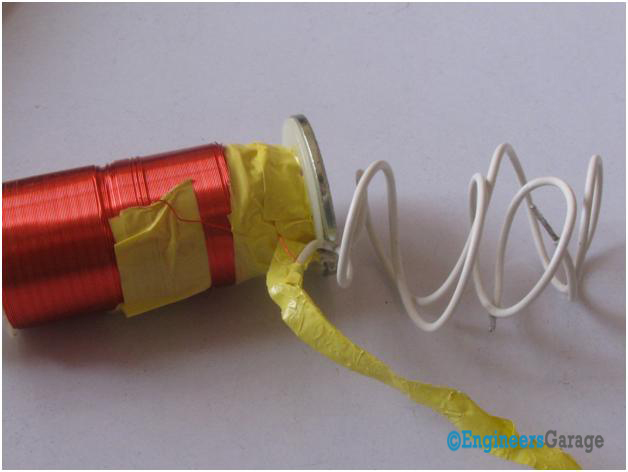
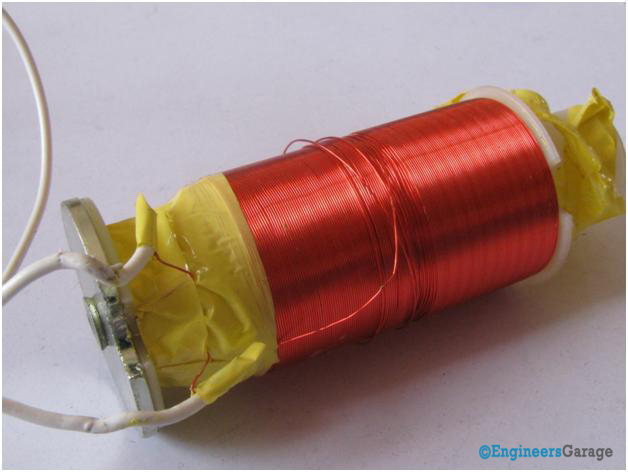
The region where connecting wires disappear into the solenoid can be scooped up to take out the inner plastic layer. Copper wires are wound around the plastic bobbin which is insulated using an insulating tape.
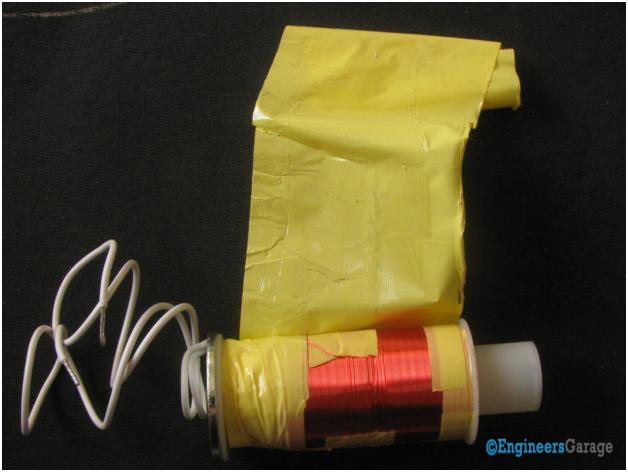
 

Copper Coils

Fig. 7: How A Tubular  Solenoid Looks Post Removal of Insulation Tape

On removing the Insulating tape the copper coils of the solenoid are visible. The insulating tape is used to minimize current losses and ensure safety while handling the solenoid. It is the addition of the tape that makes the copper coil to be known as “tape wrapped coil”.  Whenever the coil is subjected to DC current, it gets magnetized, thus pulling the plunger in.
 

Solenoid Wiring

Fig. 8: Tubular Solenoid Copper Wires After Complete Removal of Insulation Tape

Copper Coil
 

Solenoid Connections

Fig. 9: Copper Coil


Copper Winidng

Fig. 10: Completely Unwinded Copper Coil Inside Tubular  Solenoid

In order to find what lies underneath the coil, one has to cut or unwind the coil. Beginning from where the connecting wires terminate into the coil, one can begin unwinding the solenoid. The plastic bobbin can be seen beneath the copper coils.


Filed Under: Insight
Tagged With: coil, insulation, solenoid, tubular solenoid
 

Next Article

← Previous Article
Next Article →

Questions related to this article?
👉Ask and discuss on Electro-Tech-Online.com and EDAboard.com forums.


Tell Us What You Think!! Cancel reply

You must be logged in to post a comment.

EE TECH TOOLBOX

“ee
Tech Toolbox: Internet of Things
Explore practical strategies for minimizing attack surfaces, managing memory efficiently, and securing firmware. Download now to ensure your IoT implementations remain secure, efficient, and future-ready.

EE Learning Center

EE Learning Center
“engineers
EXPAND YOUR KNOWLEDGE AND STAY CONNECTED
Get the latest info on technologies, tools and strategies for EE professionals.

HAVE A QUESTION?

Have a technical question about an article or other engineering questions? Check out our engineering forums EDABoard.com and Electro-Tech-Online.com where you can get those questions asked and answered by your peers!


RSS EDABOARD.com Discussions

  • Reducing "shoot-through" in offline Full Bridge SMPS?
  • High Side current sensing
  • How to simulate power electronics converter in PSpice?
  • Voltage mode pushpull is a nonsense SMPS?
  • Layout IRN reduction in Comparator

RSS Electro-Tech-Online.com Discussions

  • Back to the old BASIC days
  • Parts required for a personal project
  • PIC KIT 3 not able to program dsPIC
  • Failure of polypropylene motor-run capacitors
  • Siemens large industrial PLC parts

Featured – RPi Python Programming (27 Part)

  • RPi Python Programming 21: The SIM900A AT commands
  • RPi Python Programming 22: Calls & SMS using a SIM900A GSM-GPRS modem
  • RPi Python Programming 23: Interfacing a NEO-6MV2 GPS module with Raspberry Pi
  • RPi Python Programming 24: I2C explained
  • RPi Python Programming 25 – Synchronous serial communication in Raspberry Pi using I2C protocol
  • RPi Python Programming 26 – Interfacing ADXL345 accelerometer sensor with Raspberry Pi

Recent Articles

  • What is AWS IoT Core and when should you use it?
  • AC-DC power supply extends voltage range to 800 V DC
  • Infineon’s inductive sensor integrates coil system driver, signal conditioning circuits and DSP
  • Arm Cortex-M23 MCU delivers 87.5 µA/MHz active mode
  • STMicroelectronics releases automotive amplifiers with in-play open-load detection

EE ENGINEERING TRAINING DAYS

engineering

Submit a Guest Post

submit a guest post
Engineers Garage
  • Analog IC TIps
  • Connector Tips
  • Battery Power Tips
  • DesignFast
  • EDABoard Forums
  • EE World Online
  • Electro-Tech-Online Forums
  • EV Engineering
  • Microcontroller Tips
  • Power Electronic Tips
  • Sensor Tips
  • Test and Measurement Tips
  • 5G Technology World
  • Subscribe to our newsletter
  • About Us
  • Contact Us
  • Advertise

Copyright © 2025 WTWH Media LLC. All Rights Reserved. The material on this site may not be reproduced, distributed, transmitted, cached or otherwise used, except with the prior written permission of WTWH Media
Privacy Policy

Search Engineers Garage

  • Electronic Projects & Tutorials
    • Electronic Projects
      • Arduino Projects
      • AVR
      • Raspberry pi
      • ESP8266
      • BeagleBone
      • 8051 Microcontroller
      • ARM
      • PIC Microcontroller
      • STM32
    • Tutorials
      • Audio Electronics
      • Battery Management
      • Brainwave
      • Electric Vehicles
      • EMI/EMC/RFI
      • Hardware Filters
      • IoT tutorials
      • Power Tutorials
      • Python
      • Sensors
      • USB
      • VHDL
    • Circuit Design
    • Project Videos
    • Components
  • Articles
    • Tech Articles
    • Insight
    • Invention Stories
    • How to
    • What Is
  • News
    • Electronic Product News
    • Business News
    • Company/Start-up News
    • DIY Reviews
    • Guest Post
  • Forums
    • EDABoard.com
    • Electro-Tech-Online
    • EG Forum Archive
  • DigiKey Store
    • Cables, Wires
    • Connectors, Interconnect
    • Discrete
    • Electromechanical
    • Embedded Computers
    • Enclosures, Hardware, Office
    • Integrated Circuits (ICs)
    • Isolators
    • LED/Optoelectronics
    • Passive
    • Power, Circuit Protection
    • Programmers
    • RF, Wireless
    • Semiconductors
    • Sensors, Transducers
    • Test Products
    • Tools
  • Learn
    • eBooks/Tech Tips
    • Design Guides
    • Learning Center
    • Tech Toolboxes
    • Webinars & Digital Events
  • Resources
    • Digital Issues
    • EE Training Days
    • LEAP Awards
    • Podcasts
    • Webinars / Digital Events
    • White Papers
    • Engineering Diversity & Inclusion
    • DesignFast
  • Guest Post Guidelines
  • Advertise
  • Subscribe