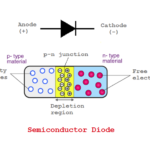
A diode is the most basic semiconductor device. Yet, it has endless applications. In semiconductor electronics, the p-n junction as a basic diode serves as the foundation for all other sophisticated semiconductor components and their design. The design principles that apply to a semiconductor diode are the same applies to transistors and other components.
Interestingly, when we define any electronic component, the definition is not usually based on its construction. Instead, any electronic component is defined by its unique electrical behavior. Sticking to the same convention, we can define a diode as a voltage-controlled, two-terminal, one-way switch. Often, the term diode is referred to a semiconductor diode. A semiconductor diode is not the only diode device. There are many different types of diodes, and many of those are semiconductor diodes specially designed to have specific physical or electrical properties. There are also diodes which are not simple p-n junction and have different construction and design. In this article, we’ll have a brief look at the various diodes.
Small signal diodes
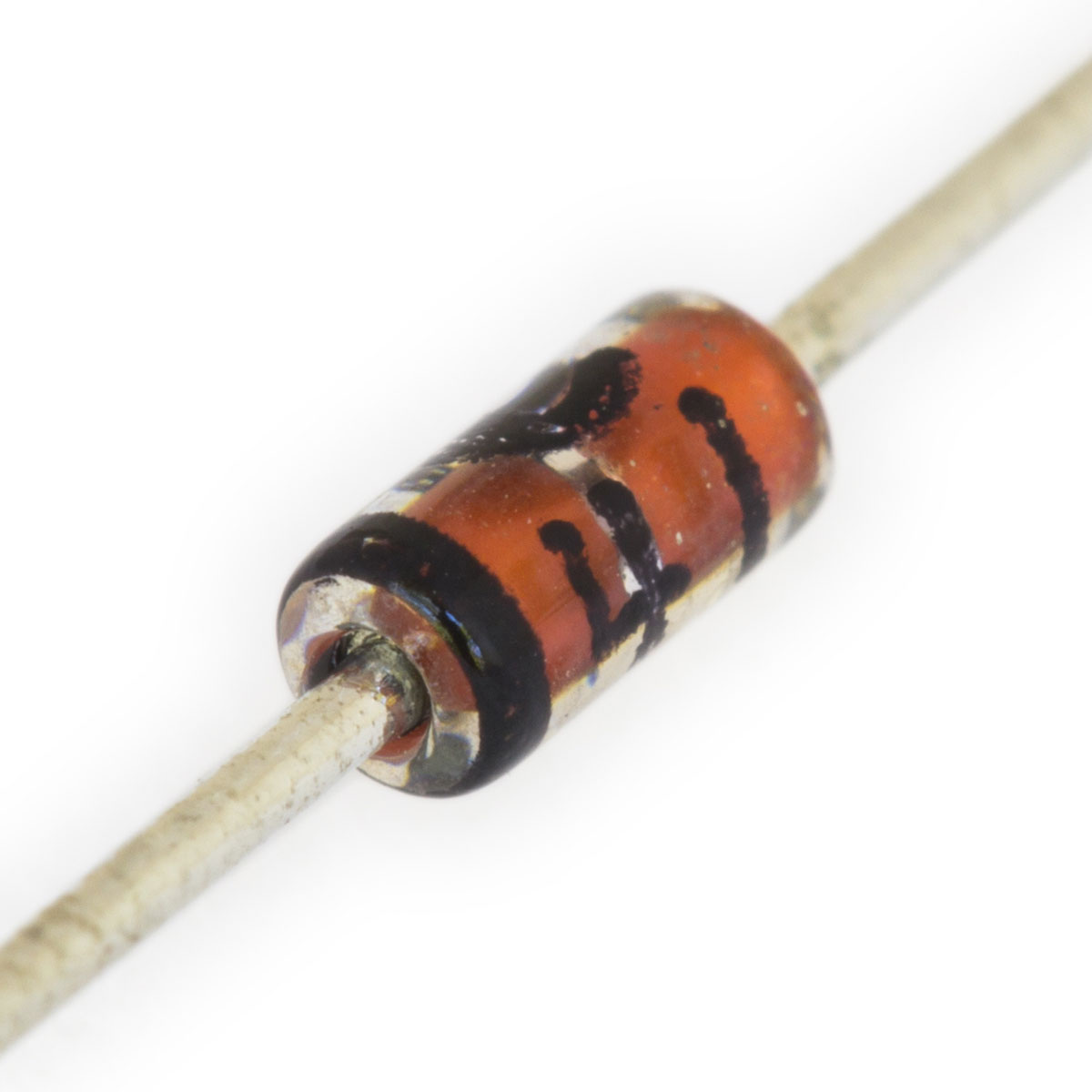
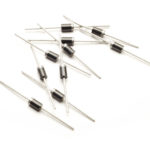
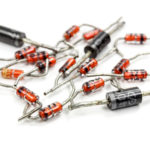
Small signal diodes are general-purpose semiconductor diodes having a small current-carrying capacity. These diodes are generally made up of silicon or germanium and are designed to suit small-current high-frequency applications. Small signal diodes are smaller than typical rectifier diodes and are usually enveloped with glass to protect them from contamination. That is why these are also known as Glass Passivated Diodes. The cathode terminal of the diode is indicated by a red or black band on one side. As these diodes have minimal current carrying capacity, their power rating is also very low. A small signal diode with a current rating of 150 mA may have only 500 mW of power rating. Small signal diodes are used in high-frequency or pulsating, low-current applications like radio, television, digital logic circuits, clipper and clamper circuits, high-speed switching, and parametric amplifiers. Important characteristics to look out for in a small-signal diode’s datasheet are Peak Reverse Voltage, Reverse Current, Peak Forward Current, Peak Forward Voltage, and Reverse Recovery Time.
 \
\
Large signal diodes/rectifier diodes
Large signal diodes are different from small signal diodes in the area of their p-n junction. Large signal diodes have a large p-n junction area. This increases the current carrying capacity as well as the peak inverse voltage. These have a very low forward resistance to reverse resistance ratio, with the forward resistance typically a few ohms while the reverse resistance is in megaohms. That is why these diodes are not suitable for high-frequency circuits. They have a large PIV rating, small forward resistance, and large current carrying capacity. These are generally used for AC-to-DC voltage rectification or to suppress high peak voltages. In fact, large signal diodes are mostly rectifier diodes.

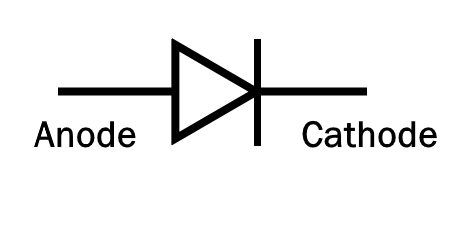
Both small and large signal diodes have the same symbol as that of a generic diode.
Zener diode
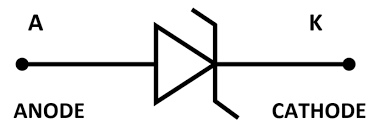
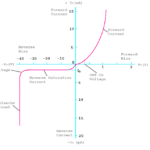
Zener diodes are semiconductor diodes designed with heavy doping to utilize Zener breakdown in their operation. When a normal diode is an applied reverse voltage higher than its PIV rating, it is permanently damaged and goes open circuit. On the other hand, due to heavy doping, when a Zener diode is applied reverse voltage higher than its ‘Zener voltage’, it starts conducting current in the reverse direction without damage due to Zener breakdown and avalanche breakdown. A Zener diode has a controlled breakdown in the reverse region. It conducts current above a ‘Zener voltage’. It is mostly used as a voltage rectifier in DC applications. Various Zener diodes have Zener voltage in the range of 2V to 200V. These diodes are also used as protection diodes in several semiconductor circuits.

Zener diode has the following symbol.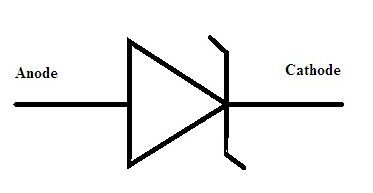
Light emitting diode
Light emitting diodes are special diodes that emit visible light when forward biased. In reverse bias, like a normal diode, they are in a state of non-conduction and do not emit any light. These are semiconductor diodes made up of gallium arsenide and similar semiconductor substrates with a high-energy bandgap between their conduction and valance bands. Due to the high energy bandgap, when electrons and holes combine near the p-n junction, the radiated energy is in the form of visible light or infrared light instead of heat.
There are many different kinds of LEDs. They are generally classified by the light they transmit. For example, IR LEDs are light emitting diodes having light emission in the infrared region. LEDs of different colors have different semiconductor substrates, cut-in voltage, and reverse voltage ratings. LEDs are used in both AC and DC applications. It is important to look out maximum forward voltage, PIV rating, and maximum forward current of an LED before using it as an application. LEDs are quite sensitive and may easily get damaged. The PIV ratings of LEDs, like signal diodes, are usually in tens of volts, while the maximum forward voltage is only a few volts.
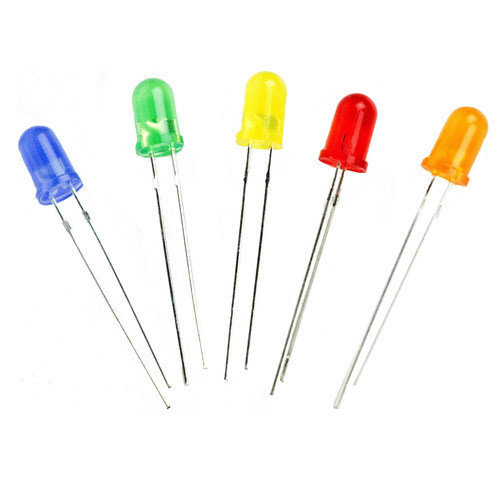
LEDs have the following symbol.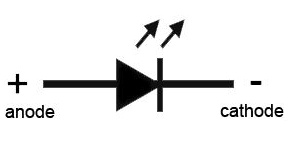
Schottky diode
Schottky diodes are different from typical p-n diodes. A Schottky diode is constructed by forming a junction between N-type semiconductor material and metal like Platinum, Chromium, or Tungsten. Due to metal-semiconductor junction, these diodes have a high current carrying capacity and fast switching time. The metal junction also reduces the cut-in voltage and improves the power efficiency of the diode. Because of all these benefits, Schottky diodes are used for high-frequency rectification and high-frequency switching applications.
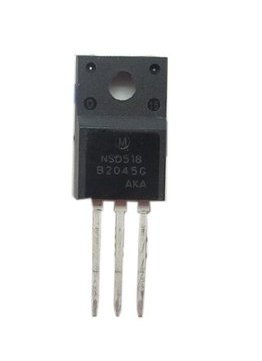
A Schottky diode has the following symbol.
Shockley diode
Just as a generic diode has two layers, Shockley diode has four. It is also called the PNPN diode. It is similar to a thyristor without a gate terminal. It is identified as a diode as it has only two terminals, and there are two electrical states of the device – conduction and non-conduction. It can go in conduction state only when a forward voltage is applied to it. A PNPN diode is basically one PNP and one NPN transistor coupled together. The other transistor conducts when there is sufficient voltage to bias the first one. Therefore, a PNPN diode requires a sufficient forward voltage to go in a conduction state. If the forward voltage is dropped or reverse voltage is applied, the Shockley goes in a non-conduction state. In the conduction state, the Shockley diode is said to be ‘ON’, while in the non-conduction state, it is said to be ‘OFF’. The two most common applications of Shockley diode are trigger switch for SCR and relaxation oscillator or saw tooth oscillator. These diodes are used in audio amplifier circuits.
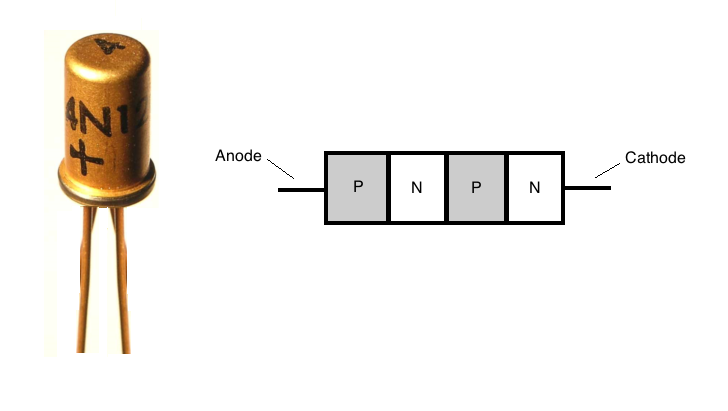
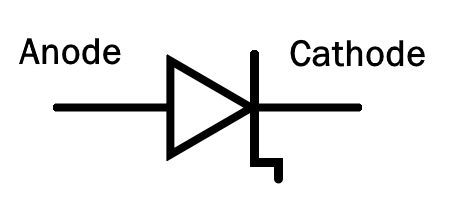
Following is the electrical symbol of Shockley Diode.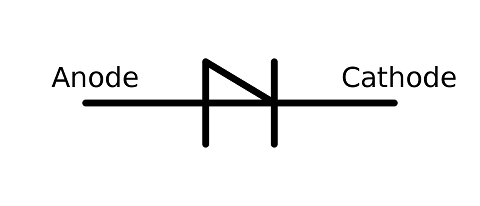
Tunnel diode
Tunnel diodes are heavily doped semiconductor diodes – 1000 times more than a large signal diode. These diodes use a quantum phenomenon called resonant tunneling. These diodes exhibit strange negative resistance in their forward characteristics. When forward biased, the current increases with voltage and reaches a peak. This is called peak current, and the voltage at this point is called peak voltage. Then, with the increase in voltage, the current decreases and drops to a low point called valley current. The voltage at this point is called valley voltage. On increasing the applied voltage beyond valley voltage, the current rises exponentially without any further drop. These diodes have a very fast switching time of the order of nano-seconds. Their transient response is only limited by the junction capacitance and stray wire capacitance. Tunnel diodes are used as high-speed switches in microwave oscillators and amplifiers. It is possible to tune these diodes both electrically as well as mechanically.

The following is the electrical symbol of the tunnel diode.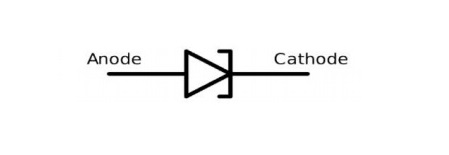
Varactor diode
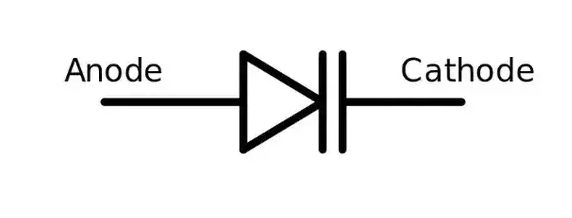
Varactor diodes work like a variable capacitor which is why these diodes are also called varicap diodes. They are connected via a reverse bias in a constant-voltage circuit. Their specialty is that their depletion layer can be increased or decreased by varying the applied reverse voltage. The change in the depletion layer changes the capacitance of the diode. The capacitance of a varactor diode can be varied to very high values. These diodes are used in voltage-controlled oscillators, voltage-controlled capacitors, frequency multipliers, parametric amplifiers,phase-locked loops, and FM transmitters.
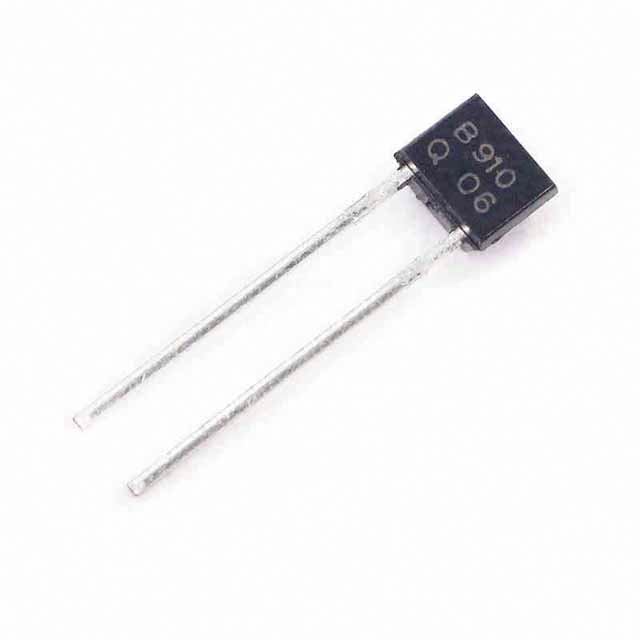
Varactor diode has the following electrical symbol.
 Laser diode
Laser diodes are a kind of light emitting diodes. The acronym ‘laser’ stands for Light Amplification by Stimulated Emission of Radiation. The P-N junction of a laser diode has polished ends. When forward biased, the junction emits photons, and then the emitted photons are reflected back and forth between the polished ends of the diode. As a result, more electron-hole pairs are generated. Their recombination produces more photons in phase with the previous photon. This leads to the generation of a pencil beam from the diode’s semiconductor region, monochromatic and monophasic. The emitted laser beam could be in the visible or infrared region. These diodes are also known as an injection, semiconductors, and diode lasers. Laser diodes are used in optical fiber communication, laser printers, optical disc readers, intrusion detection systems, remote control applications, and barcode readers.
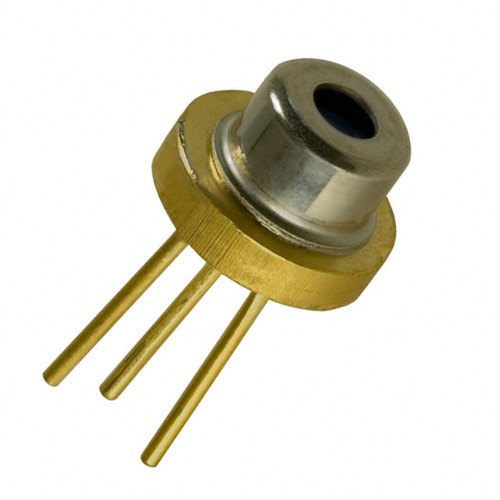
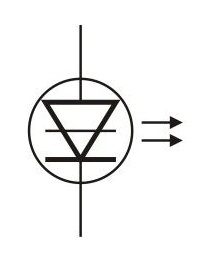
A laser diode has the following electrical symbol.
 Step recovery diode / snap diode
Step recovery diodes or snap diodes are designed for high-frequency operation. These are also called snap-off diodes and charge-storage diodes. These diodes are used in higher-order multipliers and pulse shaper circuits. When a sinusoidal signal is applied to them, they store charge in the positive pulse and utilize that charge in the negative pulse. The rise time of the current pulse remains the same as the snap time. That is why these are called step recovery diodes. The cut-off frequency of these diodes ranges between 200 and 300 GHz. Higher is the frequency of the signal, the better is their efficiency.
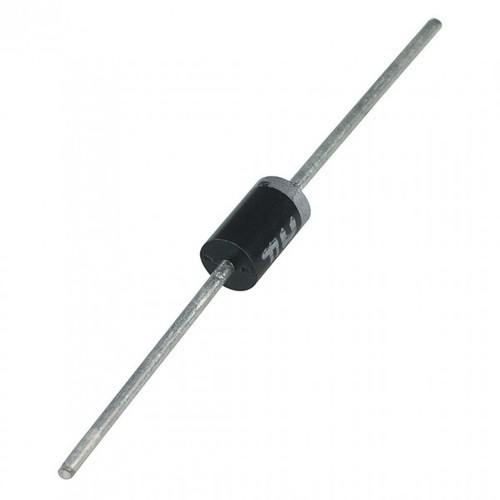
The following is the electrical symbol of the step recovery diode.
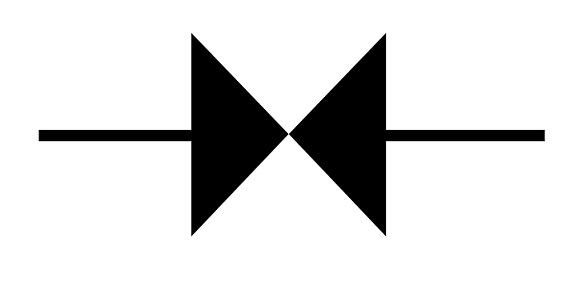
 Gunn diode
Gunn diodes are designed by n-type semiconductor material only. Two n-type materials are joined to form a depletion region between them. The depletion region of n-type materials is very small. When a forward voltage is applied, the current increases and reaches a peak level. Then, as the forward voltage is further increased, the current starts decreasing exponentially. This is called negative differential resistance. Gunn diodes are also called transferred electron devices. In the conduction state, these produce microwave RF signals. Gunn diodes are used in microwave amplifiers.
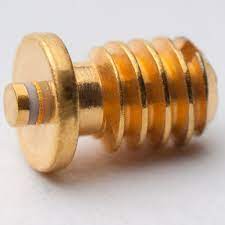
The following is the electrical symbol of Gunn Diode.
 PIN diode
PIN diodes have a layer of intrinsic material between the p-type and n-type material. In forward bias, electrons and holes are injected in the intrinsic layer from the n-type and p-type material, respectively. The presence of an intrinsic layer increases the depletion layer and produces an electrical field between p-type and n-type material. The current flows through the diode due to this electrical field. The increased depletion layer decreases the capacitance of the diode while it increases the response speed. It also increases the photo-sensitive region of the diode. PIN diodes are used in high-speed, high-sensitivity applications like photodetectors, RF switches, and attenuators.

A PIN diode has the following electrical symbol.
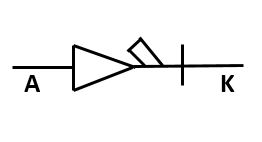 Photodiode
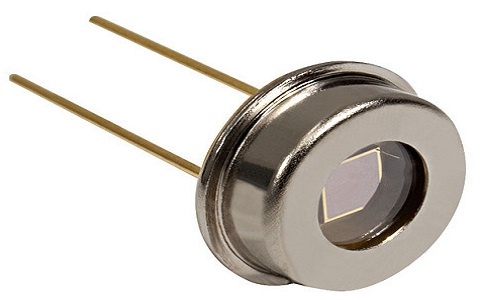
Photodiodes are semiconductor diodes designed to produce an electric current in response to irradiation by visible, infrared, and ultraviolet light. The diode has a thin p-type material and heavily doped n-type material. There is a narrow depletion region between them, which is exposed to light through p-type material. Due to the design of the diode, exposure to light triggers the formation of a large amount of electron-hole pairs in the depletion region. The electrons and holes are diffused in the p-type and n-type materials due to the built-in electric field producing an electric current from the anode (p-type material exposed to light) to the cathode (metallic contact).
A photodiode has the following electrical symbol.
 Solar cell
Solar cells are simply photodiodes optimized to deliver power to a load. They operate in photovoltaic mode. The voltage across the load resistance causes the solar cell to forward bias. There are many different types of solar cells based on the construction material and design. Silicon solar cells are the most popular ones. Other materials used for constructing solar cells include polycrystalline silicon, Cadmium telluride, and Cadmium Indium Gallium Diselenide.

A solar cell, also known as a photovoltaic cell, has the following electrical symbol.
 IMPATT diode
Impact Avalanche Transit Time Diode is called IMPATT Diode. These diodes are used to generate high-power radio frequencies in the range of 3 to 100 GHz. These diodes are connected in reverse bias in an oscillator circuit. Due to the avalanche effect, they produce a large amount of current beyond the peak inverse voltage. In an oscillator circuit, the current through the IMPATT diode lags from the voltage. Due to the negative resistance effect and the resonant circuit, high-power radio waves are produced from the diode.
IMPATT diode has the same electrical symbol as the generic diode.
Constant current diode
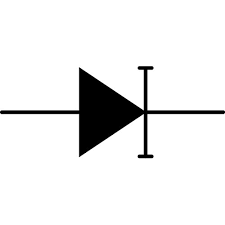
Constant current diodes are also known as current-limiting diodes and current-regulating diodes. These are used as current regulators. They have a construction similar to a JFET but are a two-terminal device. A constant current diode has forward characteristics, in which, initially, the current rises exponentially like a normal diode. Then, beyond a current regulation point, the current is saturated. The diode achieves saturation of current by dropping more voltage across it. Constant current diodes are used in battery charging, power supply circuits, and laser diode circuits.
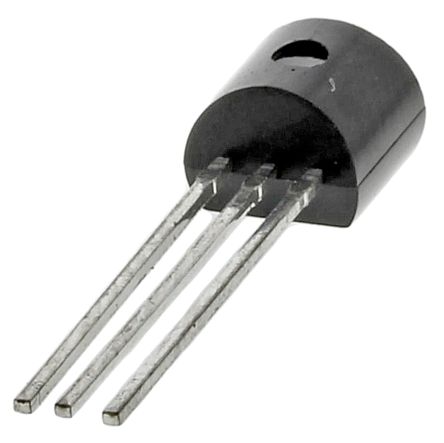
A constant current diode has the following electrical symbol.
 Power diode
Power diodes are large signal diodes. These are specifically used for voltage rectification. The most important parameter of power diodes is their PIV rating. The PIV rating of power diodes typically ranges from 50V to 1000V. Maximum forward current and forward resistance to reverse resistance ratio are other two important factors that need to be checked in a power diode’s datasheet.

A power diode has the same symbol as a generic diode.
 Point contact diode
Point contact diodes are used to detect high-frequency signals. These are produced by creating a PN junction between a gold or tungsten wire and an n-type germanium material. The gold wire allows passage of high current through the junction. The forward characteristics of this diode are similar to a normal diode; however, in reverse bias, the diode acts as an insulator. This causes the diode to operate as a capacitor in reverse bias conditions and block DC while passing through a high-frequency AC signal. The diode body is enclosed in a glass envelope.
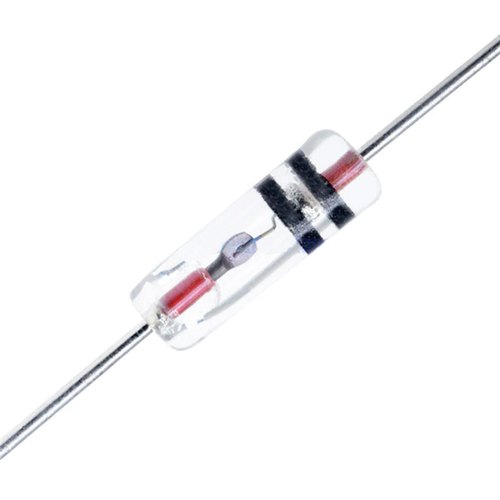
The point contact diode has the same symbol as the generic diode.
Silicon controlled rectifier
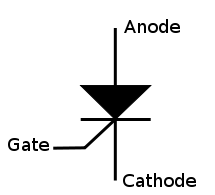
A Silicon Controlled Rectifier (SCR) is similar to a Shockley diode with an additional gate terminal. The forward and reverse characteristics of an SCR are similar to a diode except that it goes in a conduction state in the forward region when the gate is triggered. These are mainly used in power control applications.

Silicon Controlled Rectifier has the following electrical symbol.
 Crystal diode
Crystal diodes are similar to point contact diodes. These are also known as Cat’s Whisker. They are designed by pressing a metallic wire against a semiconductor crystal. Their use is confined to microwave detectors and receivers.
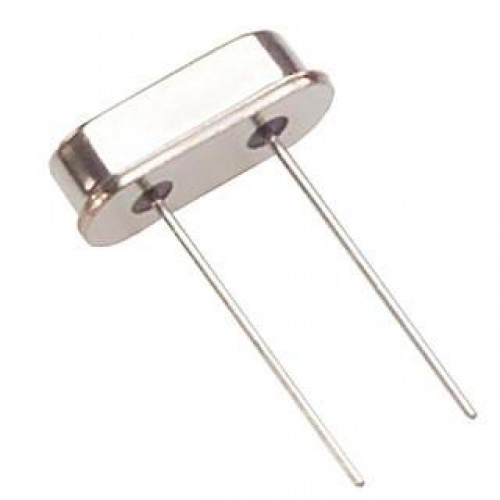
Crystal diode has the same electrical symbol as the generic diode.
Transient voltage suppression diode
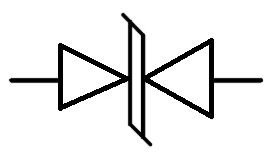
Transient Voltage Suppression Diodes are similar to Zener diodes. They are used to clamp transient voltages and are designed to offer low impedance in response to a transient voltage by immediately entering the avalanche breakdown region. The response time of the diode is in picoseconds. These diodes are designed to have a minimum clamping voltage. Voltage suppression diodes are used in a variety of applications, mainly involving signal processing or data communication.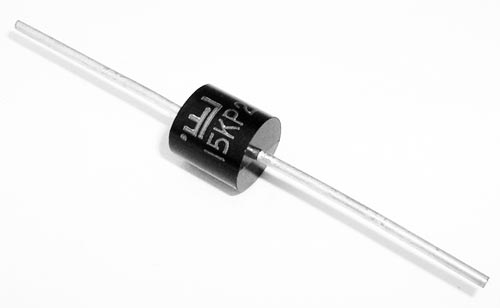
Voltage Suppression Diodes have the following electrical symbol.
 Super barrier diode
Super barrier diodes are used as rectifier diodes. They are designed to have low forward voltage like a Schottky diode and low reverse leakage current like a normal diode. These diodes have fast switching times and can handle high power with minimum loss.

Super barrier diode has the same electrical symbol as the Schottky diode.
Avalanche diode
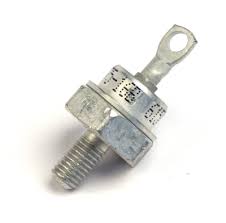
Avalanche diodes operate on the principle of avalanche breakdown. They are designed to have precise reverse breakdown voltage. These diodes are used in radio and microwave applications.
An avalanche diode has the following electrical symbol.
 Peltier diode
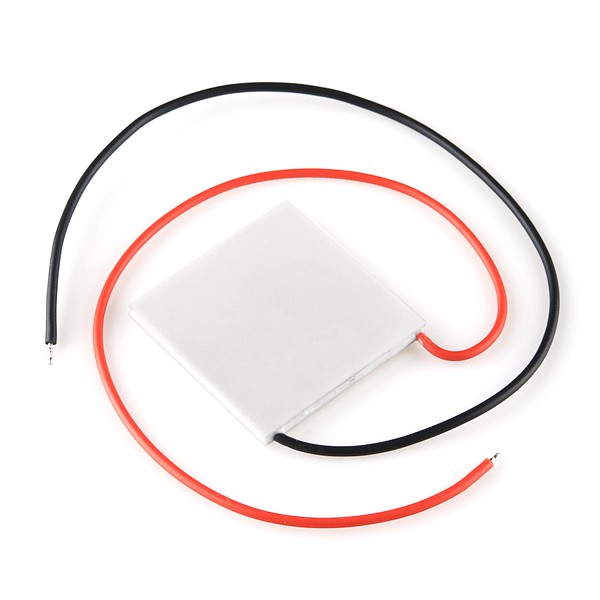
Peltier diodes are designed to have a two-material junction. In these diodes, there is heat flow in a single direction along the direction of current flow. These diodes are used as sensors and heat engines in heating and cooling applications.
Gold doped diodes
In these diodes, gold is used as a dopant. These diodes are faster than signal diodes and also have a low reverse leakage current.
Vacuum diodes
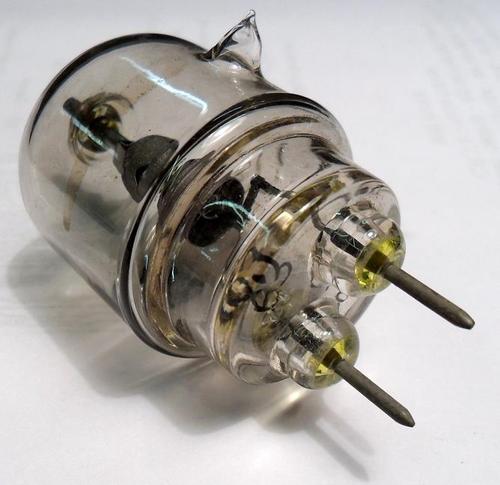
This is the simplest vacuum tube with two electrodes – cathode and anode. The cathode emits electrons, and the anode collects them. These diodes have a high inverse voltage rating. They are used in audiophiles, amplifiers, field electron emission, fluorescent displays, and rectifiers.
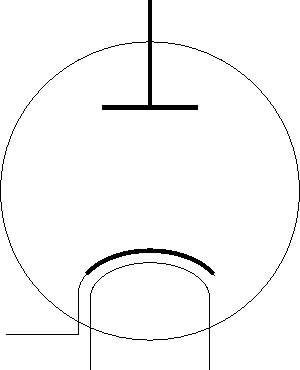
The vacuum diode has the following electrical symbol.
You may also like:
Filed Under: LED Lighting, Tech Articles
Questions related to this article?
👉Ask and discuss on EDAboard.com and Electro-Tech-Online.com forums.
Tell Us What You Think!!
You must be logged in to post a comment.