Neuralink, Elon Musk’s brain chip company, has made history. Following FDA approval, the neurotechnology company conducted its first human trial in January 2024. The company’s first human test subject, Noland Arbaugh, received the brain-computer chip implanted successfully.
A 2016 diving accident left Noland paraplegic from the shoulders down. However, the Neuralink chip is giving him movement. Following a successful implant, Arbaugh mentally moved a laptop cursor while playing chess. He posted on X (formerly Twitter) through his thoughts. Arbaugh abilities are largely returning, thanks to the new implant.
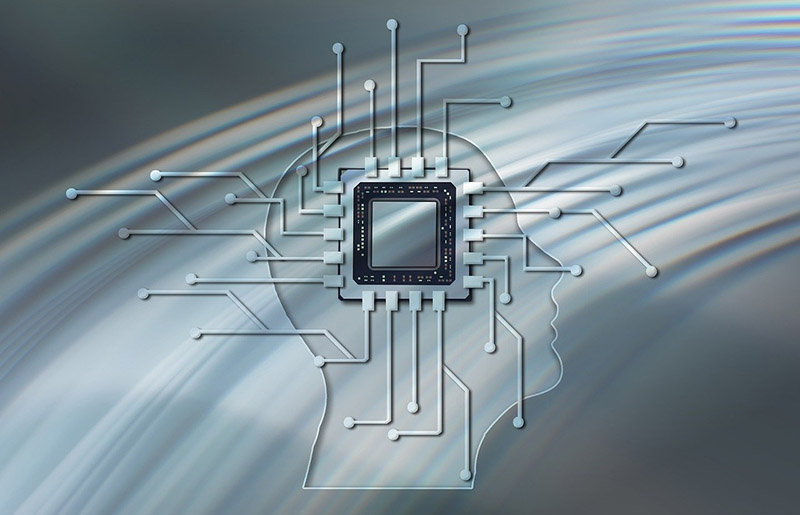 This first Neuralink human trial is a landmark event, offering a new age of brain-computer interface (BCI) technology. The results of the trial were revealed by Musk through a social media post in January 2024. The trial targeted individuals with severe paralysis due to conditions like cervical spinal cord injury or amyotrophic lateral sclerosis (ALS).
The first human trial codenamed “PRIME” (Precise Robotically Implanted Brain-Computer Interface) had promising outcomes. The human participant, reportedly recovering well, could control a computer cursor using his thoughts after a calibration period. The trial evaluated the surgical technique and the safety and effectiveness of the Link implant. Additionally, it evaluated how the brain-computer interface successfully translates neural impulses into useable commands.
The success of this first trial is promising, offering potentially life-changing applications for individuals with neurological illnesses or paralysis. There’s an opportunity for humans to communicate and accomplish tasks by controlling external equipment, and future trials are expected. Although it’s reported that Link did not work to perfection, it’s a significant first step toward changing lives and offering insight into what the human brain is capable of with integrated technology.
In this article, we’ll explore this revolutionary technology and discuss how it works. We’ll also consider Link’s potential and how it can impact people.
What is Neuralink?
Founded in 2016, Neuralink is Elon Musk’s cybernetics startup. The company is developing implantable brain-computer interfaces (BCIs) called “Link.” This device is a coin-sized computer chip that can be surgically embedded in a human’s brain to decode and stimulate activity. It provides a link between the human brain and computers.
This technology translates thoughts into actions, and it has the power to change the way people engage with the world. According to Neuralink, it will “allow paraplegics to move again and give sight to those born blind.”
The chip, implanted into a subject’s brain, has hundreds of neural threads that branch out into different sections of the brain, controlling motor skills. These neural threads are so fine that it’s impossible to implant them by hand. That is why the chip is surgically inserted into the subject’s brain by a fully autonomous neurosurgical robot. The neural threads have 1,024 electrodes that record and emit electrical currents into the neurons, allowing the brain and a computer to interact.
With the chip, a subject can interact with external peripheral devices, such as a keyboard or a mouse, simply by thinking. The chip could help subjects regain motor skills and other cognitive abilities.
Neuralink’s journey
Elon Musk founded Neuralink in 2016 with a team of scientists and engineers. Initially, the company focused on bringing together a team of experts (in neuroscience, biochemistry, and robotics) to test brain-computer interfaces, which had been so far confined to academia. In April 2017, the company announced that it aimed to create advanced brain interfaces to cure severe neurological disorders. They also referred to transhumanism, or the long-term goal of human enhancement.
Early in 2017, the company obtained the Neuralink trademark. By July 2019, it raised $158 million, most of which was from Musk. Additionally, the company hired 90 new scientists and engineers. Before conducting studies on humans, Neuralink tested the safety and effectiveness of their brain implant on a variety of species, including rats, mice, monkeys, lambs, and pigs.
In January 2024, Neuralink received FDA approval to conduct human trials, implanting the chip in a paralyzed participant’s brain. The trial was a success, as the subject was able to control a computer’s mouse through his thoughts. With the help of Neuralink Telepathy, Musk’s name, the subject could also post on X through his thoughts.
New participants are currently being recruited for future testing. Neuralink has achieved potentially life-changing success quickly.
How Link works
Neuralink is developing a brain-computer interface. This dates back to the 1920s when German psychiatrist Hans Berger first recorded electrical activity in the human brain using electroencephalography (EEG). This discovery led to an understanding of brainwaves and their role in communication.
In the ’60s and ’70s, researchers explored the possibility of using brain signals to control external devices. For example, researcher Eberhard Fetz demonstrated that monkeys could control objects using signals from their motor cortex.
In 1973, Jacques Vidal, a UCLA researcher, coined the term “brain-computer interface” in a scientific paper. Since their inception, different types of brain-computer interfaces have been developed. Some are non-invasive, like an EEG, while others involve surgically implanted electrodes for a stronger signal reception.
Before Neuralink, much of the research on brain-computer interfaces was limited to scientific papers and academia. Neuralink has developed a real-life application and is commercializing this area of study for the first time.
Link, the brain-computer interface created by Neuralink, is a coin-sized device surgically embedded in a brain. Link consists of microscopic biocompatible threads (biocompatible electrical wires dubbed as “threads”) into the brain. These neural threads are implanted by an autonomous neurosurgeon robot. These threads are made extremely flexible so they can move with the brain, minimizing any damage to the surrounding tissues.
Link has 64 neural threads and 1,024 electrodes connected to it. Each electrode connects to an individual neuron in the brain so it can receive and stimulate electrical signals. The electrodes facilitate two-way communication between Link and the individual neurons. They pick up the electrical signals generated by firing neurons.
At this scale, Link can record brain activities at an extremely high resolution, enabling precise and accurate data processing. A computer connected via wireless communication deciphers this vast amount of data generated by Link.
Link has a custom microprocessor, the N1 chip, which analyzes the incoming raw data stream and ranks the most significant signals first. After processing, the data is wirelessly sent to an outside receiver — typically, a smartphone or other comparable gadget. The wireless transmission is done via Bluetooth.
Advanced software supports the device with machine learning and identifies unique patterns corresponding to specific thoughts or movements. With the help of AI, the software decodes the signals, translating the complex patterns in the data into particular actions or intentions. This translation could be used to control external devices like computers or prosthetic limbs or send signals to other parts of the brain for therapeutic purposes.
The N1 chip is capable of processing up to 10,000 channels of neural data in real time, facilitating a natural and intuitive interaction between the brain and the computer.
Implanting Link
Implanting Link in a human brain involves a surgical procedure by professional neurosurgeons. The Neuralink robot also plays a vital role in the surgery. The neural threads are so small and fragile that they cannot be implanted into the brain by hand. The robot has been programmed and trained to implant threads without harming the brain’s surrounding structures.
It uses advanced imaging technology to create a 3D map of the brain. Typically, general anesthesia is used, so the patient is unconscious during the procedure.
The neurosurgeons use a high-resolution 3D map of the brain to guide the Neuralink robot in inserting the electrodes at the correct location and depth within the brain. Thanks to the robot’s ability to adjust its position in real-time, the electrodes are implanted at the proper depth and angle. It’s crucial to place the electrodes at the proper depth since different brain regions require different types of stimulation.
The electrodes are attached to the chip behind the subject’s ears. The chip receives and transmits signals from individual neurons, facilitating interaction between the brain and an external computer connected to Link via Bluetooth.
After surgery, the participant is typically discharged on the same day and is given time to recover. The implant is cosmetically invisible and blends in with the skull, so it’s barely noticeable.
The possibilities
Neuralink’s technology offers a range of possible uses that go beyond science fiction. Initially, it’s focusing on people with paraplegia with motor, sensory, and visual functions, as well as treating neurological disorders. Link could help individuals with disorders such as Parkinson’s, ALS, epilepsy, or general paralysis. It could facilitate communication between people who are mute or blind by giving them the ability to use a virtual keyboard and mouse or transmit messages with their thoughts.
This device allows individuals to move, follow through on tasks, and interact with computer peripherals and other communication devices through their thoughts.
Link could enhance human cognitive abilities. Thanks to computer chips implanted in their brains, people might be able to learn, solve problems, and improve their memory. Adding artificial intelligence opens new possibilities for cooperation between humans and machines.
Neuralink has the potential to transform how humans engage with the digital environment. It also has potential in the field of augmented reality. Link could manipulate virtual objects in an AR environment just by thinking about it. In robotics, Link could offer a real-time interaction between humans and robots.
Safety and ethical concerns
There are at least 42 brain-computer implants worldwide, but Link is the most advanced human-embedded chip. Despite successfully demonstrating the first human trial, Musk has been accused of misleading his investors.
Reportedly, records showed that such studies on monkeys resulted in debilitating health impacts, including reported issues of paralysis, seizures, and brain swelling.
Transparency is a key concern in the development of the Link chip. Four US congressmen have called for the Securities Exchange Commission to investigate whether Musk had deceived investors. Despite having USDA approval, Neuralink’s trial is not listed in the public clinical trial database maintained by the National Institutes of Health. The lack of public disclosure, including the locations of the implants or the long-term results, is a cause for concern.
According to researchers, once implanted, the chip’s electrodes cannot be replaced. Therefore, Link’s durability could result in major health concerns for participants.
There are also ethical concerns about this device. Link could be potentially misused or used to invade privacy, carry out surveillance, or impact society. These ethical concerns should be addressed before the technology advances much further.
Conclusion
According to some neurobiologists, Neuralink’s device does not bring any new technological advancements because several companies have produced surface electrodes with similar technology for decades. However, Neuralink has successfully demonstrated on a human subject, which is a first. The company has integrated many existing technologies into one package, and its approach to connecting with individual neurons is commendable.
Currently, BCI technologies can only detect a few hundred connections. Raising that number to tens of thousands will lead to much precision and accuracy. There are approximately 80 billion neurons in the brain and some 1,000 synapses in between them. Insight into even some tens of thousands of them can significantly improve our understanding of the human brain and consciousness.
Neuralink’s human trail is a massive step toward merging human consciousness with computing and artificial intelligence. It could help enable physically people with physical disabilities or neurological disorders to regain their lives.
You may also like:







Filed Under: Tech Articles
Questions related to this article?
👉Ask and discuss on EDAboard.com and Electro-Tech-Online.com forums.
Tell Us What You Think!!
You must be logged in to post a comment.