How to choose right battery for a application?
In this article, we will learn how to choose a battery according to the specifications and requirements of your application. Some applications need more power and some need to be cheap with less power. There are various factors and parameters that to consider when choosing the best battery for your application.
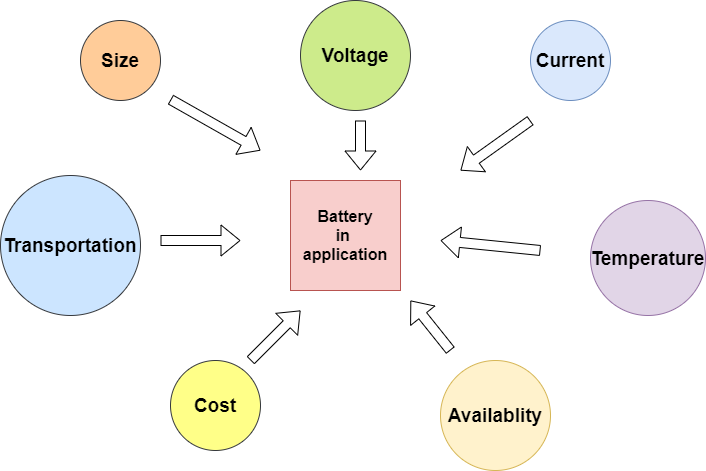
Figure 1. Different battery factors to consider
No one battery is perfect for every application. The factors to be considered when choosing a battery for your specific applications are given below.
- Rechargeable or non rechargable
- Voltage
- Capacity, Power, and Energy
- Self-Discharge
- Temperature
- Cost
- Size and shape
- Life cycle
- Battery chemistry
- Availability
- Transportation
Rechargeable or non-rechargable
When choosing a battery, the most important point is that wether it should be rechargeable (secondary batteries) or non-rechargeable (primary batteries). That choice will depend upon the application. For example, suppose the device is made for occasional use as a flashlight. In that case, or in the case of a toy, calculator, smoke alarm, etc., you can use a non-rechargeable (primary) battery which needs very little power and which will run for a long period.
The device which is used continuously and which requires continuous discharge such as laptops, smartphones, smartwatches, should work on rechargeable batteries.
Voltage
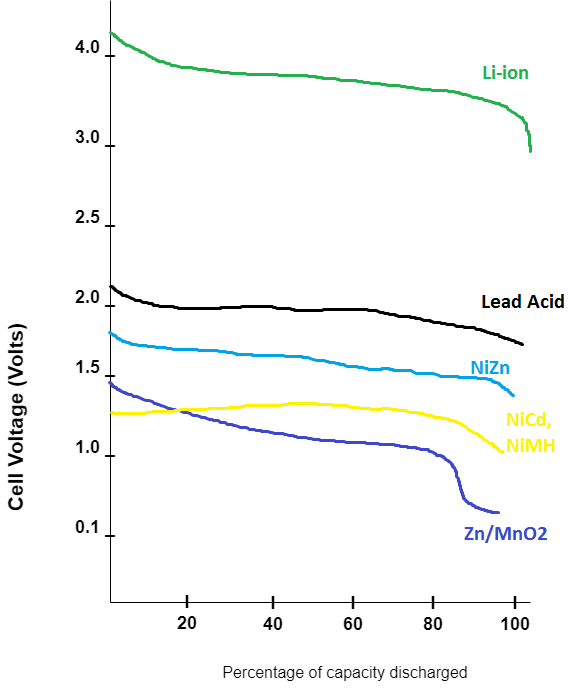
Battery voltage is another important factor. A lead-acid battery has a nominal voltage of 2 V, and which varies from 2.40 V to 1.8 V. The Ni-MH and Ni-Cd batteries have a nominal voltage of 1.2 V, varying from 1.55 V to 1.1 V. The Li-ion battery has a nominal voltage of 3.7 V, and it varies from 3.7 V to 3 V. The voltage can be used according to the capability of your circuit.
Most circuits work on 3 V. Therefore, we can use two lower voltage batteries in series to get 3 V or higher or use a Li-ion battery.
Some circuits work on 5 V and 12 V or higher. Here again, you can use a boost converter to fulfill requirements, or you can use batteries in a series to get a specific voltage.
There are also buck converters available that reduce voltage. The discharge curve of all batteries is given below. You can see that all batteries have an approximate flare discharge curve.
Capacity, power, and energy
The battery discharge timing or runtime of the battery depends upon the capacity of the battery. The capacity is defined on the battery in Ah or mAh; this is the discharge current capability to provide for one hour.
The Li-ion cell can deliver more power than other Ni-Cd or Ni-MH batteries. Power is multiplied by the current provided by the battery with battery voltage. If a battery voltage is 3.6 V and the current which it can supply is 2A, then you can use the power calculation given below.
P = V x I [ where V is in voltage, I is in Ampear ]
P = 3.6 x 2
P = 7.2 W
Energy is defined as how much time the power can deliver by a battery – or we can say power is multiplayer by time. The battery is capable of giving 2A for an hour.
E = P x T
E = 7.2 x 1
E = 7.2 Wh (watt-hour)
Let’s take another example using a tank filled with water. The power of the tank is the capability to store 10 liters of water. Now, let’s open the tap of the tank and allow water to come out. The tank will empty in one hour. This is its energy. It can empty 10 liters in one hour.
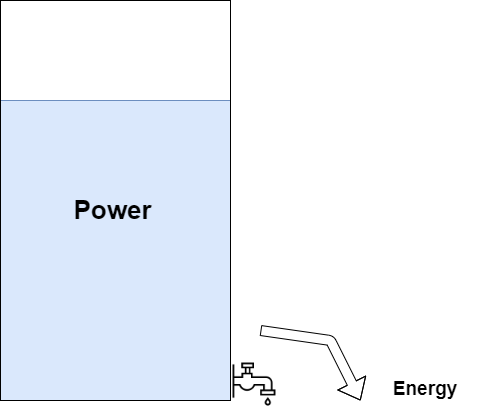
Figure 3. Example for Power vs. energy.
The power rating totally depends upon the manufacturer. You can choose the battery according to your needs, or by connecting in a series, we can increase voltage or connect in parallel to increase the current.
Self-discharge
The primary battery has many attractive features as it has a much lower rate of discharge. That’s why they are perfect for the device which is used occasionally. But the secondary battery has a higher self-discharge plus charging. If the application can adjust the charging device before use, then a secondary battery can be used.
Temperature
The Temperature reacts to charging and discharging. The Temperature of the Li-ion battery goes about 20-degree calculus to 45-degree calculus. The temperature can be reduced by reducing the charging current, but it increases the time of charging. The Temperature of the discharge depends upon how much power is drawn from the battery; it can go above 60-degree calculus.
The environmental temperature also affects the battery performance. The electrolyte might get frozen under 0-degree calculus. The Li-ion battery can operate up to -40°C, but performance may be reduced, as shown in the graph below.
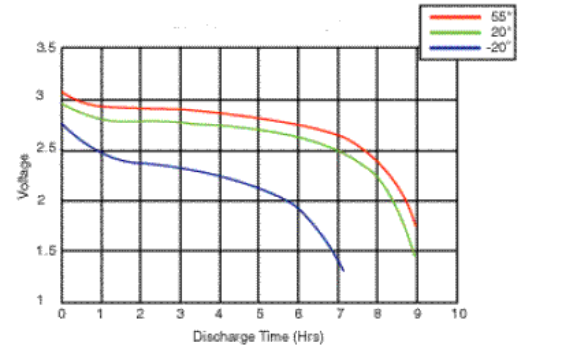
Figure 4. Temperature for different batteries.
Cost
Cost is important to factor in the bulk production of the device. If the device needs to be cheap and affordable, there is no matter of battery performance; then you can choose the primary battery, which is cheap and easy to available. The voltage can be increased by connecting it in series.
If there is high power consumption in the device, you should choose a secondary battery even if it is costly because the user does not want to have to change or buy a new battery after one to two hours.
The same holds true for performance. If a device needs better performance, then you should compromise with cost.
Size and shape
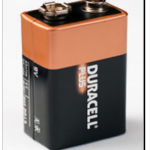
Batteries come in standard sizes: AA, AAA, AAAA, C, D, 9V, CR123A, 23A, and CR2032, allowing you to choose according to power or size. But Devices which does not have much space to put standard size battery the lithium-ion battery available in thin sizes and it is also customizable according to your requirements.
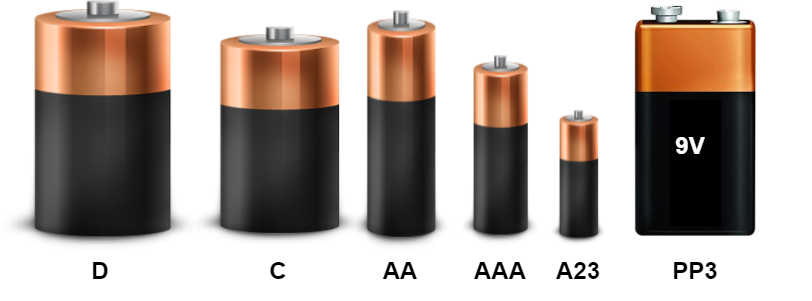
Figure 5. Standard battery size.
Life cycle
The life cycle number will tell you how many times the battery can be charge or discharge. The Li-ion battery has a cycle of about 400 to 1200. The Ni-Cd and Ni-MH have a cycle of about 2000. The cycle is specified in the manufacturer datasheet, and it can vary with various factors such as how much current is applied to charge it, temperature, etc.
Battery chemistry
There are many types of batteries available in the market which have different chemistry. The most popular are Lead-acid, Ni-Cd, Ni-MH, and Li-ion. The battery can be chosen according to requirements.
Availability
If the battery in the device is secondary, it will run for a long period. For the primary battery, the battery should be easily available in the market.
Transportation
There are certain rules and regulations for battery transportation. The alkaline, Ni-Cd, and Ni-MH are considered as “Dry Cell” and are not listed as hazardous material or dangerous material by the US. But the Li-ion batteries are listed as dangerous material, so this is regulated in transport. The Li-ion battery should not have to charge more than 30 percent to transport.
Choosing a battery
The following table shows the difference between some of the easily available batteries.
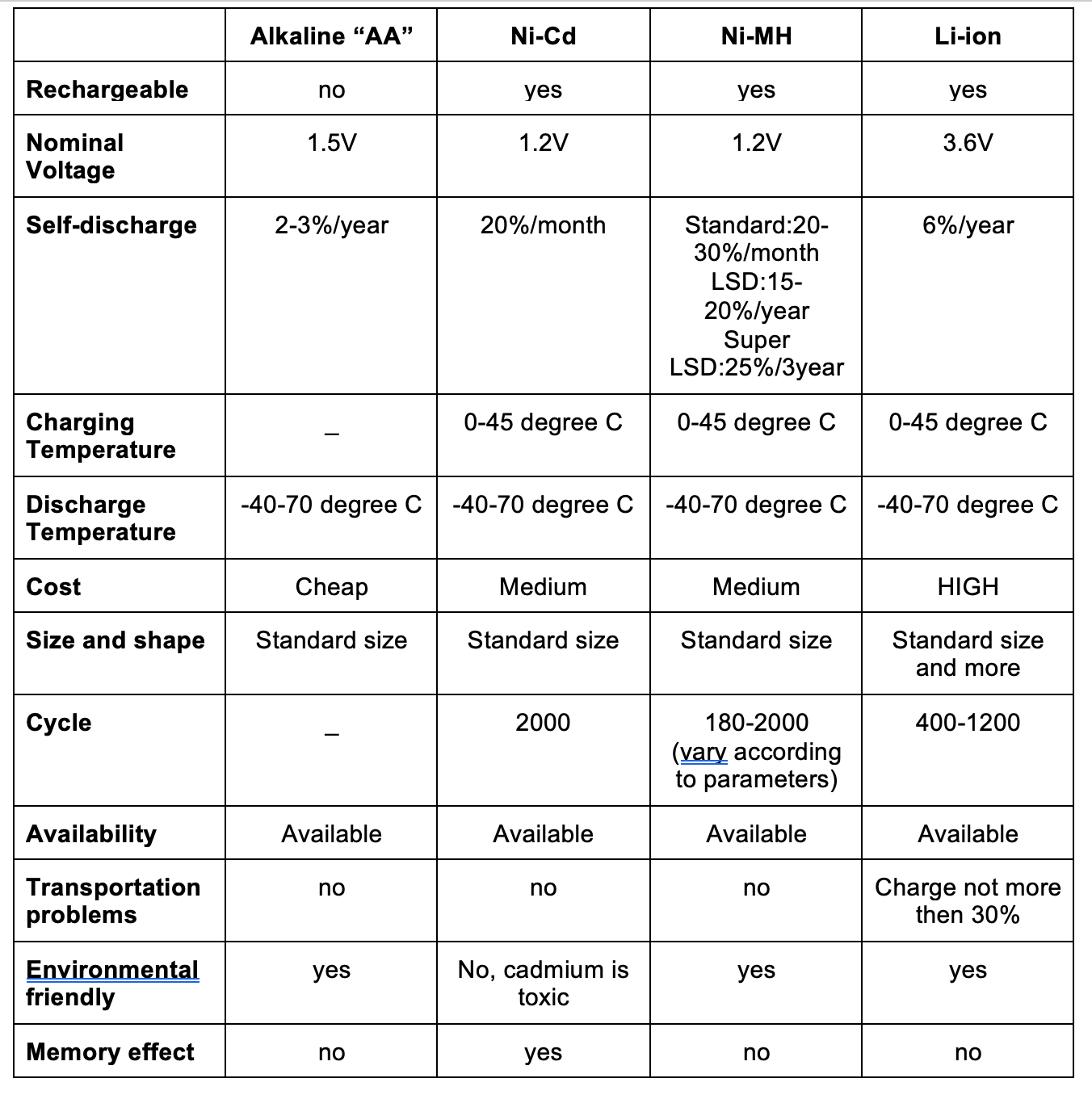
Which battery should I choose?
By considering all of the points given above, you can choose a battery for your specific application. Here are some additional points to consider.
Primary battery
- If the device can run on low power and there is no frequent battery change needed
- If you want to make your device cheap
- If the device use is occasional
- If there is charging not possible
- If the device is used in the survival area where charging is not possible
- If the device is super small, you can go with a coin cell
Lead-acid
- If you need more power to run like a projector or any sound system
- The device is fixed at any place
- If high current needed with cheap cost
Ni-Cd
- If your device is small and can use a standard battery
- If there is no issue with toxic chemical
- If you want to transport the device
- Low energy density compares to other batteries
- Long life
- High discharge current about 15°-20°C
Ni-MH
- Energy density is higher than Ni-Cd
- The life cycle is low than Ni-Cd
- A not toxic chemical used
- If your device is small and can use a standard battery
- If you want to transport the device
- Discharge current is about 1°-10°C
Li-ion
- Energy density is very high than Ni-Cd or Ni-MH
- Discharge 5°-15°C
- If your device does not have much space
- Very expensive
- Can be transported below 30% charge
References
- https://components101.com/article/how-to-select-a-battery-for-your-electronics-project
- https://www.dfrsolutions.com/blog/how-to-select-the-right-battery-for-your-application-part-1-battery-metric-considerations
- https://www.prba.org/wp-content/uploads/Overview-of-Battery-Transport-Regulations.pdf
- https://www.batterypoweronline.com/news/department-of-transportation-releases-new-rule-on-transport-of-lithium-batteries/#:~:text=The%20rule%20prohibits%20the%20transport,the%20use%20of%20alternative%20provisions
- http://www.suppo.com/v1/NiMH%20vs%20NiCd%20and%20Li-ion%20battery_2014916531.pdf
- https://batteryuniversity.com/learn/article/elevating_self_discharge
- https://batteryuniversity.com/learn/archive/whats_the_best_battery#:~:text=Nickel%20Cadmium%20(NiCd)%20%E2%80%94%20mature,relatively%20low%20in%20energy%20density.&text=The%20NiCd%20contains%20toxic%20metals,NiMH%20contains%20no%20toxic%20metals.
- https://i.stack.imgur.com/UnDwU.png
You may also like:


Filed Under: Battery Management, Tutorials
Questions related to this article?
👉Ask and discuss on EDAboard.com and Electro-Tech-Online.com forums.
Tell Us What You Think!!
You must be logged in to post a comment.